Sustainable Interior Building Materials Distributor in India
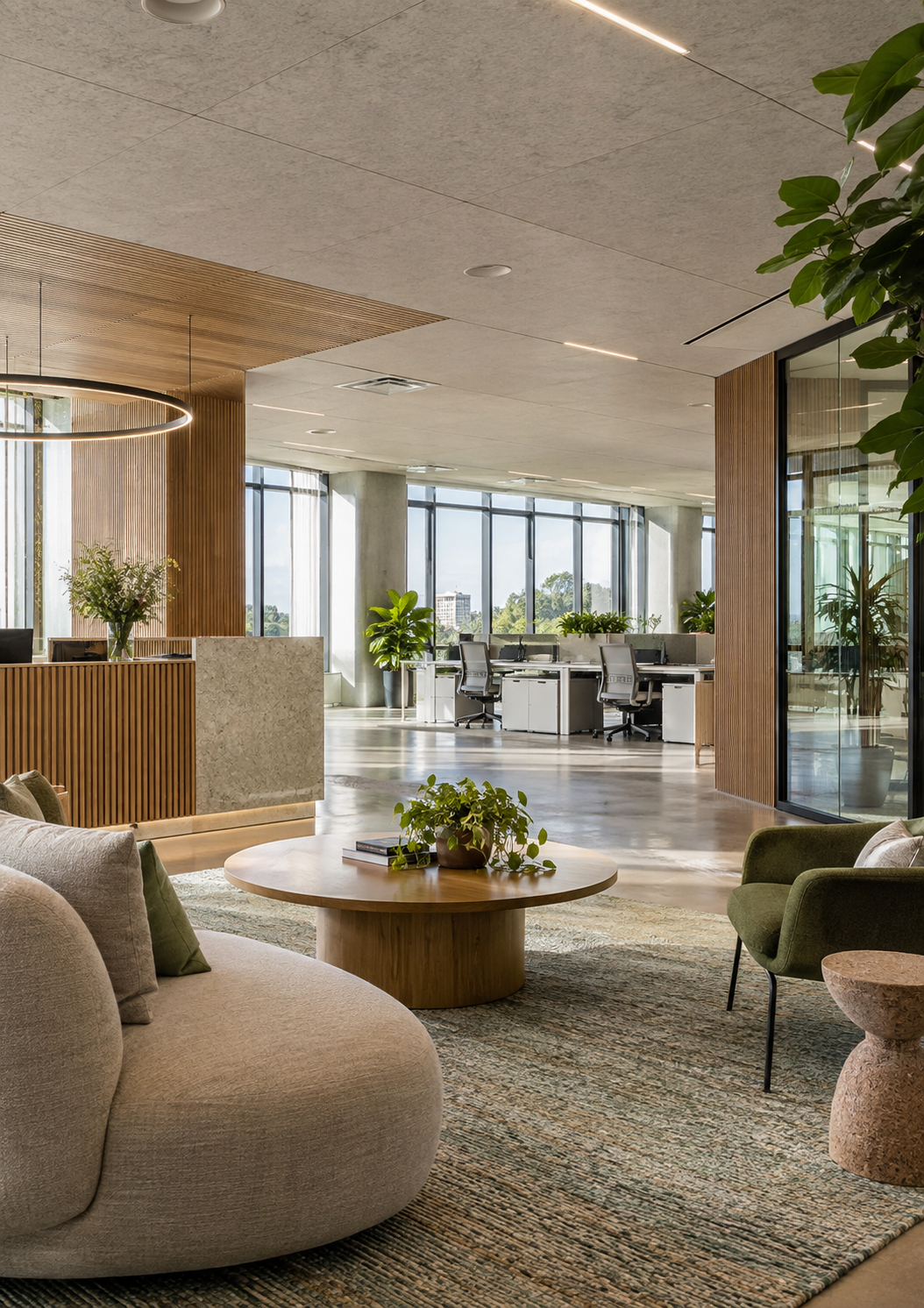
SUSTAINABLE INTERIOR BUILDING MATERIALS FOR COMMERCIAL SPACES
Greener Material Choices. Better-Prepared Projects.
Most conversations about “sustainable materials” start with a label. Ours start with a question: is this actually the right product for this space?
BSC Interiors distributes interior building materials to architects, designers, consultants, contractors, procurement teams, and corporate project heads across India. We’re not a certifying body and we don’t hand out green stamps — what we do is help you match a product’s real performance data (durability, upkeep, application fit, documented environmental attributes) against what your project actually needs.
Our catalogue covers ceilings, flooring, walls, workspace furniture, lighting, plywood, laminates, and sanitaryware for commercial and institutional builds.
One thing worth knowing upfront: certifications and sustainability paperwork aren’t uniform across brands, collections, or even individual SKUs. So before you specify anything, we’ll help you confirm exactly what applies to the product you’ve picked — not the product line in general.
WHAT DOES “GREENER” MEAN AT BSC INTERIORS
We don’t slap “eco-friendly” on a product and call it done. Before recommending anything, we’re asking things like:
The honest answer is: it depends on the product. A vinyl floor and a ceiling tile don’t get evaluated the same way, and neither should be judged against a single generic checklist. That’s why we look at the specific item, the specific application, and whatever documentation actually exists for it — instead of assuming one material is right everywhere.
WHY INTERIOR MATERIAL SELECTION MATTERS
We don’t slap “eco-friendly” on a product and call it done. Before recommending anything, we’re asking things like:
The materials in a room do more than decide how it looks. They shape acoustics, indoor comfort, lighting, hygiene, upkeep, energy draw, and how often you’ll be redoing work down the line.
A floor that wears out in three years isn’t cheap just because it was cheap to buy. Replacing it means downtime, disposal, disruption to whoever’s using the space — costs that don’t show up on the original quote. Pick something that’s actually built for the traffic and use case, and a lot of that disappears.
In practice, that trade-off usually comes down to eight things: how the material performs functionally, how long it lasts, what it does to the indoor environment, how much upkeep it needs, how efficiently it uses resources, whether documentation backs it up, what it costs, and whether it holds its value over the life of the project.
We help you weigh those against your actual brief — not a generic template.
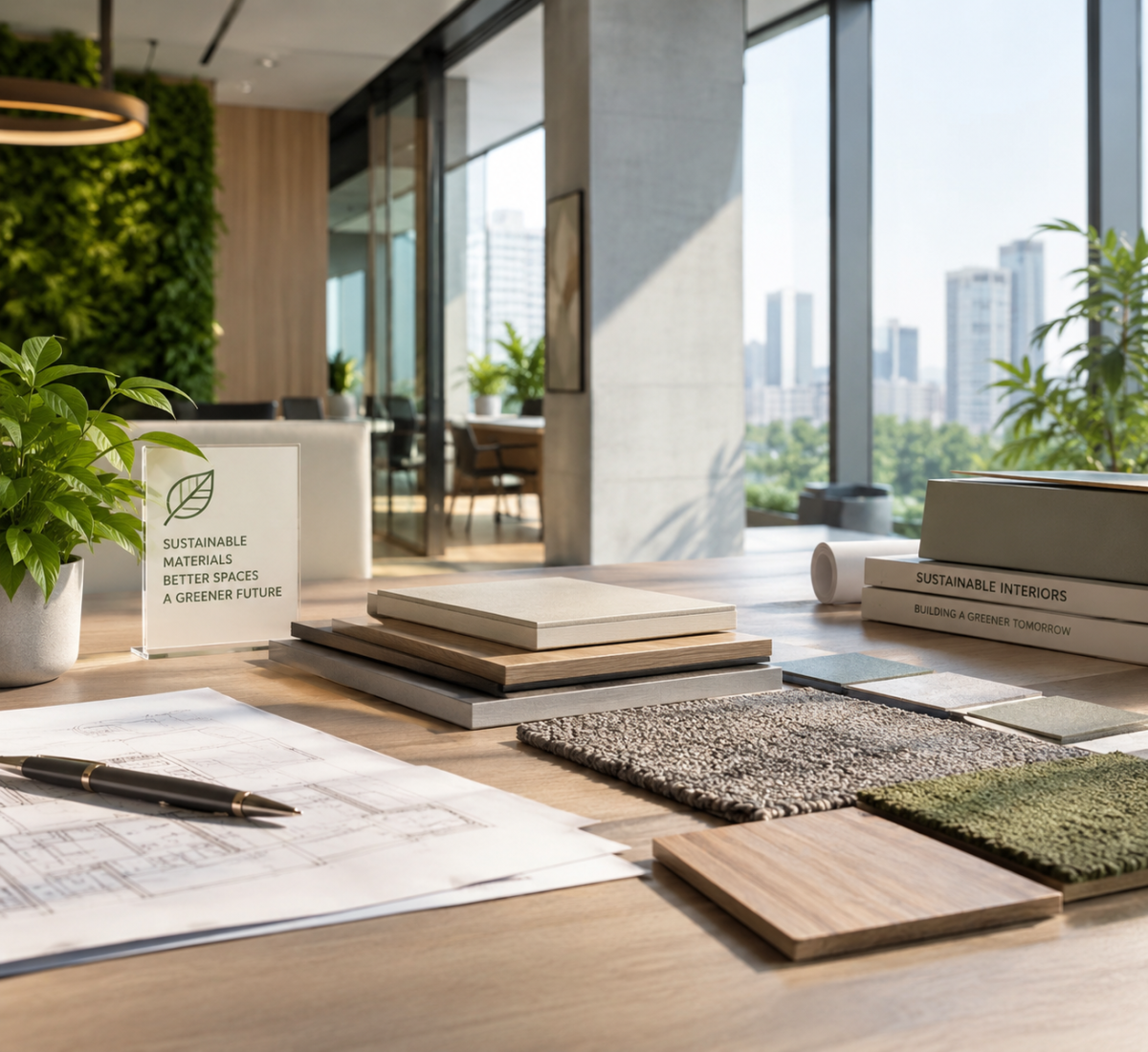
OUR GREENER MATERIAL SELECTION FRAMEWORK
We don’t slap “eco-friendly” on a product and call it done. Before recommending anything, we’re asking things like:
01 / 08
Material Composition
We review available information on recycled content, renewable inputs and responsibly sourced raw materials, where applicable.
What it is made from02 / 08
Durability & Service Life
We consider traffic, application, maintenance conditions and required performance to help reduce premature replacement.
How long it can perform03 / 08
Indoor Environmental Considerations
Selected products may offer low-emission characteristics or VOC-related documentation, depending on the brand and product range.
What occupants experience04 / 08
Resource Efficiency
Modular formats and appropriate specifications can help limit unnecessary cutting, over-ordering and avoidable material waste.
How efficiently it is used05 / 08
Maintenance & Replacement
Easy-to-clean, maintain or sectionally replaceable products can support facility management and extend an interior’s practical life.
How it stays in use06 / 08
Environmental Documentation
Depending on the product, evidence may include EPDs, recycled-content information, VOC data, sourcing certificates or sustainability reports.
What evidence is available07 / 08
End-of-Life Considerations
Where information exists, teams can review whether a material may be reused, separated, recycled, recovered or managed through a manufacturer programme.
What happens next08 / 08
Application Suitability & Performance
We connect environmental attributes with the space, traffic, safety, design and technical requirements so the selected material remains fit for purpose.
Where and how it must workGREENER CHOICES ACROSS OUR INTERIOR SOLUTIONS
Reliable product documentation helps architects, designers, consultants and project teams evaluate materials with greater confidence. Depending on the product and brand, BSC Interiors can support the selection process with relevant certifications, technical data sheets, fire-performance reports, test documents, environmental declarations and installation or maintenance information.
Explore
Consider
CERTIFICARTION & DOCUMENTATIONS
Reliable product documentation helps architects, designers, consultants and project teams evaluate materials with greater confidence. Depending on the product and brand, BSC Interiors can support the selection process with relevant certifications, technical data sheets, fire-performance reports, test documents, environmental declarations and installation or maintenance information.
Sustainability claims should be supported by relevant product information.
Depending on the manufacturer and selected product, available documentation may include:
- Environmental Product Declarations
- Health Product Declarations
- Recycled-content statements
- VOC-emission test reports
- Responsible forestry certifications
- Product carbon information
- Material ingredient disclosures
- Manufacturer sustainability reports
- Water-efficiency data
- Energy-performance information
- Take-back or recycling programme details
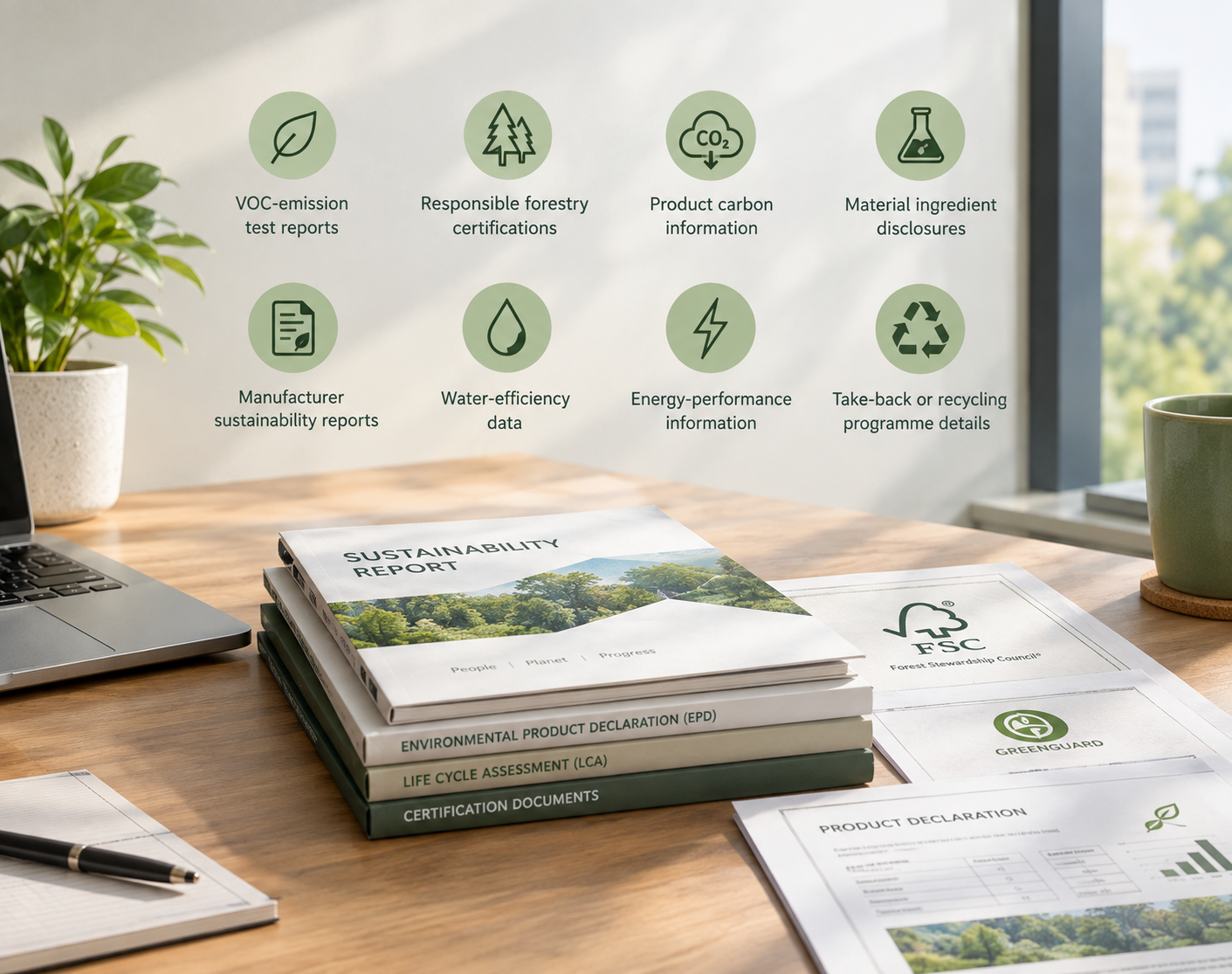
BSC Interiors can help project teams request and coordinate available documentation from relevant brand partners. Documentation must be verified against the exact product, collection, colour, manufacturing location and current specification.
SUPPORTING GREEN BUILDING GOALS
Products we supply can feed into LEED, IGBC, GRIHA, or WELL project requirements — through sourcing, recycled content, indoor air quality, material transparency, water efficiency, or energy performance. But picking a green-labelled product doesn’t hand you credits automatically. That’s decided by the rating system version, the project type, the documentation on file, and ultimately your project’s sustainability consultant. What we do is get you the product information they’ll need to make that call.
Selected
Interior
Products
LEEDIGBCGRIHAWELLInterior
Products
Possible Areas of Consideration
01Responsible Sourcing
02Recycled Content
03Indoor Environmental Quality
04Material Transparency
05Water Efficiency
06Energy Performance
SOMETIMES "GREENER" JUST MEANS "BUILT TO LAST"
A sustainable material is not defined only by recycled content or environmental claims. Products that perform reliably, require less frequent replacement and withstand the demands of commercial use may help reduce material waste, maintenance requirements and repeated project disruption throughout the space’s lifecycle.
A greener decision is not always about choosing a new or unfamiliar material. In many commercial projects, the most practical improvement can come from selecting products that are durable, maintainable and suitable for their intended use.
Longer-lasting materials may help:
- Reduce frequent replacement
- Limit material waste
- Lower maintenance disruption
- Support lifecycle value
- Improve operational consistency
- Reduce unnecessary project expenditure

Modular formats may also allow an individual tile, panel or component to be replaced without removing the complete system. The right result depends on correct specification, handling, storage, substrate preparation, maintenance and use.
SUPPORTING BETTER INDOOR ENVIRONEMENTS
Commercial interiors are occupied for long periods, so material selection can directly influence how people experience a space. Thoughtful choices may support acoustic comfort, visual comfort, indoor-air quality, hygiene, safety and overall workplace well-being—while meeting the functional needs of the project.
Acoustic Comfort
Ceiling, flooring and wall products can help manage sound in offices, classrooms, healthcare facilities and collaborative environments.
Visual Comfort
Appropriate lighting and reflective surfaces can support visibility while helping manage glare and contrast.
Indoor Air Considerations
Selected low-emission products may support indoor environmental objectives when evaluated as part of the complete building system.
Hygiene and Maintenance
Surfaces should be selected according to cleaning requirements, traffic, moisture exposure and the operational needs of the facility.
Workplace Well-Being
Comfortable, functional and adaptable interiors can create more supportive environments for employees, visitors and occupants.
SUSTAINABLE FOR DIFFERENT INDUSTRIES
Every industry has different performance, safety, maintenance and design requirements. BSC Interiors supports workplaces, healthcare facilities, educational institutions, hospitality spaces, retail environments, airports and other commercial projects with solutions selected according to their specific application and operational needs.
CORPORATE INTERIOR SOLUTIONS
CLICK TO KNOW MORE
EDUCATION INTERIOR SOLUTIONS
CLICK TO KNOW MORE
HEALTHCARE INTERIOR SOLUTIONS
CLICK TO KNOW MORE
RETAIL INTERIOR SOLUTIONS
CLICK TO KNOW MORE
SPORTS INTERIOR SOLUTIONS
CLICK TO KNOW MORE
OUR SUSTAINABLE BRAND PARTNERSHIPS
We work with established interior-material brands that focus on product performance, innovation and responsible manufacturing practices. These partnerships allow architects, consultants and project teams to explore a wider range of documented solutions across multiple interior categories without compromising the project’s functional or design requirements.
























WHY WORK WITH BSC INTERIORS
Selecting the right material requires more than comparing colours, finishes or prices. Our team supports architects, contractors, consultants and project stakeholders with application guidance, product comparisons, documentation and coordinated supply—helping them make practical, informed decisions from specification through project delivery.
Eight Categories. One Partner.
Access ceiling, flooring, wall, furniture, lighting, plywood, laminate and sanitaryware solutions through one commercial material partner.
Specify With Greater Clarity.
Compare products according to performance, application, maintenance and project requirements.
See It Before You Select It.
Review colour, texture, finish, thickness and product details before making the final selection.
Information That Supports Decisions.
Request available technical and environmental information for selected products.
Recognised Brands. Relevant Options.
Explore products from recognised Indian and international interior-material manufacturers.
Support Across Eight Indian Cities.
Commercial requirements supported across Delhi NCR, Mumbai, Bengaluru, Hyderabad, Kolkata, Lucknow, Mohali and Indore.
Built Around Commercial Projects.
Our team works with architects, contractors, consultants, procurement teams and corporate decision-makers across different project stages.
QUESTION TO ASK BEFORE SELECTION SUSTAINABLE INTERIOR MATERIALS
Before finalising a material, consider its expected service life, durability, maintenance requirements, certifications, recycled or responsibly sourced content, indoor-air impact and end-of-life possibilities. The most suitable choice should align environmental considerations with project performance, budget, safety and long-term usability.
GREENER PROJECTS BEGIN WITH BETTER MATERIALS DECISIONS
Sustainability isn’t a label you buy — it’s understanding how a material actually performs, how long it lasts, what’s documented, and whether it belongs in the space you’re putting it in. We help architects, designers, contractors, consultants, and procurement teams across India work through that — one project, one specification at a time. Tell us your application, location, quantities, preferred brand, and what documentation you’ll need. We’ll take it from there.