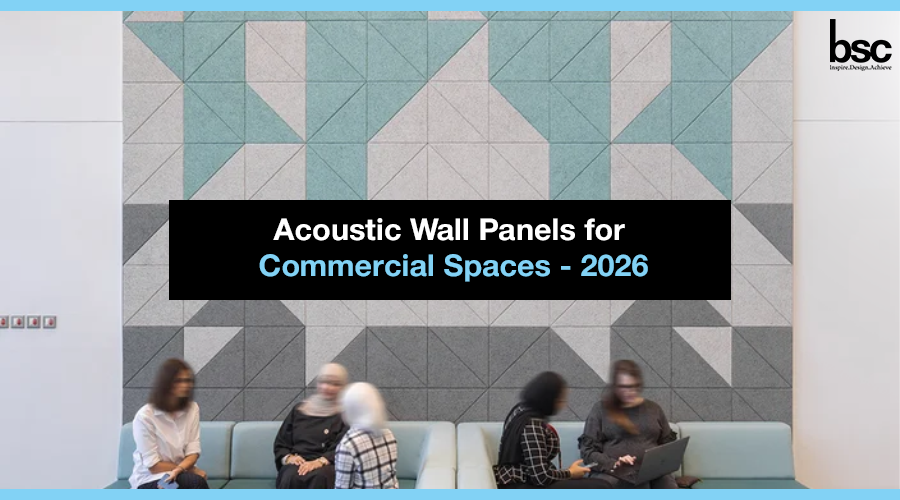
Commercial interiors are becoming more open, more collaborative, and more design-focused. Offices now have open workstations, glass meeting rooms, discussion zones, breakout areas, reception spaces, cafeterias, training rooms, and flexible collaboration areas. These layouts look modern, but they often create one common problem: noise.
When sound reflects from hard surfaces like glass, tiles, concrete, gypsum walls, metal ceilings, and large open floors, the space can feel loud and uncomfortable. Employees may find it difficult to focus. Meeting rooms may have echo. Conference calls may not sound clear. In restaurants or hospitality spaces, guests may feel disturbed by background noise. In schools and training centers, poor acoustics can affect speech clarity.
This is where acoustic wall panels become important.
In 2026, acoustic wall panels are no longer used only in studios or auditoriums. They are now a practical material choice for commercial interiors where sound comfort and visual design both matter. The right acoustic wall panel can make a space more comfortable, more productive, and more professional without changing the entire interior layout.
Based on BSC Interiors’ experience in supplying materials for commercial interior projects across India, acoustic planning should not be treated as an afterthought. If a space has too much echo or sound disturbance, solving it later can become more difficult and costly. It is always better to select the right acoustic materials during the planning stage.
What Are Acoustic Wall Panels?
Acoustic wall panels are interior wall-mounted panels designed to absorb sound energy inside a room. Their main purpose is to reduce echo and reverberation. In simple words, they stop sound from bouncing too much inside a space.
Many people confuse acoustic panels with soundproofing. Both are related to sound, but they are not the same. Acoustic wall panels improve the sound quality inside a room. They help control echo and make speech clearer. Soundproofing, on the other hand, is about stopping sound from passing from one room to another.
For example, if a meeting room sounds hollow during calls, acoustic wall panels can help. But if sound is leaking from one room into another, the solution may also need acoustic partitions, insulation, sealing, doors, glazing, ceiling treatment, and proper wall construction.
This is why material guidance matters. A good supplier should help the project team understand whether the requirement is sound absorption, sound insulation, privacy, design improvement, or a mix of all these.
Lorem ipsum dolor sit amet, consectetur adipiscing elit. Ut elit tellus, luctus nec ullamcorper mattis, pulvinar dapibus leo.
Why Acoustic Wall Panels Matter in Commercial Interiors
In commercial spaces, acoustics directly affect user experience. A beautiful office can still feel uncomfortable if it is noisy. A premium conference room can still feel poorly planned if voices echo during meetings. A classroom can look modern but still fail if students cannot hear clearly. A restaurant can have excellent interiors but still feel chaotic because of sound reflection.
Acoustic wall panels help solve these problems by controlling unwanted sound reflection. They make conversations clearer, reduce background noise, and create a calmer environment.
In offices, better acoustics can support focus and productivity. In meeting rooms, they improve speech clarity. In hospitals, they can help create quieter waiting and consultation areas. In schools and universities, they support better learning environments. In hospitality spaces, they improve guest comfort. In auditoriums and training rooms, they improve listening quality.
For commercial projects, acoustic wall panels are not only a design product. They are a performance material.
Best Materials and Products for Acoustic Wall Panels
Acoustic wall panels are available in different materials, finishes, and formats. The right option depends on the type of space, sound issue, design theme, maintenance needs, and budget.
Fabric-wrapped acoustic panels are commonly used in offices, meeting rooms, boardrooms, auditoriums, and training rooms. They offer good sound absorption and can be customized in different colors.
Mineral fibre acoustic panels are useful in commercial interiors where sound absorption and clean design are required. They can be used as wall absorbers in offices, classrooms, healthcare spaces, and hospitality interiors.
Wood wool acoustic panels combine texture with sound control. They are often used in auditoriums, cafeterias, restaurants, educational spaces, studios, and design-led commercial interiors.
Perforated gypsum acoustic boards are suitable where a more architectural wall or ceiling finish is required. They can help improve acoustics while maintaining a clean and structured interior look.
Rockwool-backed systems can support acoustic performance when used as part of wall, partition, or panel systems. They are useful where sound absorption and insulation support are both important.
Decorative acoustic panels are used when design is as important as performance. These panels can become part of the interior identity while still improving acoustic comfort.
Acoustic Wall Panel Material Comparison
Material Type | Best Used In | Main Benefit | Design Suitability |
Fabric-Wrapped Acoustic Panels | Offices, meeting rooms, boardrooms | Strong sound absorption | Available in many colors and finishes |
Mineral Acoustic Wall Panels | Offices, schools, hospitals, commercial areas | Good acoustic comfort | Clean and professional look |
Wood Wool Acoustic Panels | Auditoriums, cafés, schools, hospitality | Acoustic control with texture | Natural and design-led interiors |
Perforated Gypsum Acoustic Boards | Offices, conference rooms, institutional spaces | Seamless architectural finish | Modern wall and ceiling applications |
Rockwool Acoustic Insulation Support | Partitions, wall systems, noisy areas | Sound and thermal support | Used inside systems, not always visible |
Decorative Acoustic Panels | Reception, lounges, branded interiors | Sound control plus visual appeal | Custom patterns and premium interiors |
Acoustic Wall Panels for Offices
Office interiors have changed a lot. Open layouts, glass cabins, collaboration zones, and flexible seating are now common. These layouts help communication, but they also increase sound movement.
Acoustic wall panels are useful in office areas where employees need focus, privacy, and better sound comfort. They can be used in open workstations, phone booths, meeting rooms, focus rooms, manager cabins, conference rooms, and training rooms.
In open offices, acoustic panels can reduce reflected sound and make the environment more comfortable. In meeting rooms, they improve voice clarity during discussions, calls, and presentations. In cabins, they can make the space feel more private and less echo-prone.
For IT parks and corporate offices, acoustic wall panels should be selected based on the room size, occupancy, furniture layout, ceiling type, flooring material, and glass surface area. A room with glass walls and hard flooring may need more acoustic treatment than a room with carpet tiles and soft furniture.
Acoustic Wall Panels for Meeting Rooms and Boardrooms
Meeting rooms need clear sound. If the room has echo, people may repeat themselves, online calls may sound unclear, and presentations may feel uncomfortable.
Acoustic wall panels help control this problem. They absorb sound reflections from the walls and improve speech clarity. This is especially useful in boardrooms, conference rooms, VC rooms, interview rooms, training rooms, and client presentation areas.
The panels can be installed behind seating areas, on side walls, near screen walls, or as part of the overall wall design. They do not have to look technical or plain. With the right finish, they can match the interior theme and make the room look more premium.
For boardrooms, acoustic performance and visual finish both matter. A poorly selected panel may solve some sound issues but disturb the design. That is why product selection should be done carefully.
Acoustic Wall Panels for Healthcare Spaces
Hospitals and healthcare environments need calmer interiors. Waiting areas, consultation rooms, diagnostic centers, administrative areas, therapy rooms, and staff zones often face sound disturbance because of continuous movement and conversations.
Acoustic wall panels can help reduce noise reflection and create a more comfortable environment for patients, visitors, and staff. In healthcare projects, the material should be selected with extra care. Cleanability, durability, hygiene needs, impact resistance, and maintenance should be considered.
For healthcare spaces, acoustic treatment should not compromise safety or hygiene. The project team should select panels that match the area’s purpose. A hospital reception area may need different acoustic treatment compared to a therapy room or consultation cabin.
BSC Interiors helps project teams think about these practical differences while selecting wall and acoustic materials for commercial interiors.
Acoustic Wall Panels for Education and Training Spaces
Schools, colleges, universities, coaching centers, auditoriums, and training rooms all depend heavily on speech clarity. If sound is not clear, students may lose focus and teachers may need to speak louder.
Acoustic wall panels can improve the learning environment by reducing echo and making speech easier to understand. They are useful in classrooms, libraries, music rooms, seminar halls, lecture rooms, labs, and multipurpose halls.
In educational projects, durability is also important. The selected panel should handle regular use and should be suitable for the age group and activity level of the space. For example, a primary school classroom may need a different wall finish compared to a university seminar room.
The best acoustic solution is one that balances sound performance, safety, maintenance, and long-term value.
Acoustic Wall Panels for Retail, Hospitality and Restaurants
Retail and hospitality interiors need a balance of design and comfort. A restaurant can look beautiful but still feel unpleasant if the sound level is too high. A hotel lobby can look premium but feel uncomfortable if conversations echo. A retail store can lose its premium feel if the sound experience is poor.
Acoustic wall panels can help improve the mood of these spaces. They reduce harsh sound reflections and make the environment more pleasant for customers and guests.
In restaurants and cafés, acoustic panels can be used on feature walls, behind seating areas, near service zones, or in ceiling-wall combinations. In hotels, they can be used in lobbies, banquet areas, meeting rooms, lounges, and corridors. In retail stores, acoustic panels can be combined with branding and design finishes.
For these projects, acoustic panels should not look like an afterthought. They should be integrated into the design language of the space.
Applications by Industry
Industry | Common Acoustic Problem | Recommended Acoustic Wall Panel Use |
Noise in open work areas and cabins | Meeting rooms, focus rooms, workstation zones | |
IT Parks | Screen work disturbance and call noise | Open office zones, VC rooms, conference rooms |
Waiting area noise and consultation privacy | Waiting areas, consultation rooms, admin areas | |
Echo and poor speech clarity | Classrooms, libraries, lecture halls, auditoriums | |
Hospitality | Guest discomfort due to noise | Lobbies, lounges, banquet halls, restaurants |
Hard surfaces and customer movement noise | Feature walls, trial areas, customer zones | |
Auditoriums | Reverberation and unclear sound | Side walls, rear walls, stage-facing surfaces |
Cost and Maintenance Factors
The cost of acoustic wall panels depends on material type, thickness, finish, size, density, performance rating, installation method, brand, customization, and total area. Fabric panels may have one price range, while wood wool, perforated gypsum, mineral panels, or customized decorative panels may have different pricing.
Commercial buyers should not select acoustic panels only by cost. A low-cost panel may look similar at first, but it may not provide the required acoustic performance or long-term finish. In commercial projects, the right panel should be selected based on the space requirement.
Maintenance is also important. Offices may need panels that are easy to clean and maintain. Healthcare spaces may need more careful material selection. Schools may need durable panels. Hospitality projects may need panels that retain their finish over time.
Before finalizing acoustic wall panels, the project team should check the area of use, cleaning method, impact risk, fire-safety requirement, and design compatibility.
How to Choose the Right Acoustic Wall Panel Supplier
A good acoustic wall panel supplier should understand both design and performance. The supplier should not only show catalogues but also help the project team select the right material for the right application.
Before choosing a supplier, buyers should check whether the supplier can support commercial quantities, provide trusted brand options, explain material suitability, guide on acoustic requirements, and coordinate with architects, contractors, and procurement teams.
For large projects, product availability is also important. If panels are required across multiple floors or multiple rooms, consistency in finish and supply becomes necessary. A mismatch in shade, size, or finish can affect the overall project appearance.
The supplier should also understand that every commercial space has a different acoustic problem. A meeting room may need wall absorption. An open office may need a combination of ceiling, wall, flooring, and furniture solutions. A hotel banquet room may need a more detailed acoustic approach.
This is where expert material guidance becomes valuable.
Why BSC Interiors Is a Trusted Partner for Acoustic Wall Panels
BSC Interiors is a trusted commercial interior building material distributor in India, supporting architects, contractors, builders, procurement teams, facility managers, and project owners with premium materials for commercial projects.
For acoustic wall panels and wall solutions, BSC Interiors helps project teams choose materials based on real project needs, not just appearance. The focus is on understanding the space, identifying the sound issue, selecting the right material type, and supporting the project with reliable supply.
BSC Interiors works across multiple interior material categories, including ceiling solutions, wall solutions, flooring, sanitary ware, workspace furniture, lighting, plywood, laminates, and other commercial interior products. This wider product understanding is useful because acoustics are not controlled by wall panels alone. Flooring, ceiling, partitions, furniture, and wall surfaces all affect the final sound experience.
For example, an office with hard flooring, glass partitions, and plain ceilings may need a different acoustic strategy from an office with carpet tiles and acoustic ceiling tiles. BSC Interiors helps project teams look at these practical details before selecting materials.
If your project requires acoustic wall panels for offices, IT parks, meeting rooms, hospitals, schools, hotels, restaurants, auditoriums, retail spaces, or commercial buildings, BSC Interiors can help you source suitable products from trusted brands and material partners.
BSC Interiors’ Material Partner Support
For commercial acoustic and wall solution requirements, BSC Interiors supports project teams with trusted material options from leading brands and channel partners.
Knauf offers acoustic wall panel solutions such as OPTRA wall panels and other wall/ceiling acoustic systems suitable for commercial interiors where sound comfort and design both matter.
Gyproc supports gypsum-based wall and ceiling systems, including acoustic boards and drywall solutions that are useful in modern commercial projects.
Rockwool supports acoustic performance through insulation materials that can be used within wall, ceiling, and partition systems to improve sound and thermal comfort.
3M supports commercial wall and glass surface solutions through films and finishes that can be used for visual privacy, branding, and surface treatment in office and commercial interiors.
By combining the right material category with the right project requirement, BSC Interiors helps buyers move beyond generic wall panels and select solutions that actually suit the commercial space.
BSC Interiors’ Expert View
In many commercial projects, acoustic issues are noticed only after the space is occupied. By that time, the office is already functional, the furniture is installed, and the client has started facing disturbance. This makes correction more difficult.
The better approach is to plan acoustic materials early. During material selection, the project team should check room size, wall surface, ceiling type, flooring, furniture, glass partitions, and expected occupancy. Acoustic wall panels should then be selected based on the actual sound issue.
A conference room, a cafeteria, a classroom, a hospital waiting area, and an open office do not need the same acoustic treatment. Each area needs a different balance of sound absorption, durability, maintenance, and design.
That is why BSC Interiors recommends material selection based on application, not just catalogue appearance.
Conclusion
Acoustic wall panels are becoming an important part of commercial interiors in 2026. They help reduce echo, improve speech clarity, support privacy, and make spaces more comfortable for people who use them every day.
For offices, acoustic wall panels can improve focus and meeting quality. For schools, they support learning. For hospitals, they help create calmer environments. For hotels and restaurants, they improve guest comfort. For auditoriums and training rooms, they make listening easier and more effective.
But the right acoustic wall panel should be selected carefully. Material, finish, performance, maintenance, durability, design, and site conditions all matter. A panel that works well in a meeting room may not be the right choice for a cafeteria, hospital, or auditorium.
BSC Interiors helps commercial project teams source acoustic wall panels and wall solution materials from trusted brands and partners. With experience across commercial interior material categories, BSC Interiors supports architects, contractors, builders, facility teams, and procurement teams in choosing materials that match the actual project requirement.
Lorem ipsum dolor sit amet, consectetur adipiscing elit. Ut elit tellus, luctus nec ullamcorper mattis, pulvinar dapibus leo.
Final Words
Planning acoustic wall panels for a commercial project?
Connect with BSC Interiors for premium acoustic wall panel solutions.
For offices, IT parks, hospitals, schools, hotels, restaurants, auditoriums, retail spaces, and large commercial buildings, BSC Interiors helps you choose the right materials with trusted supply support.