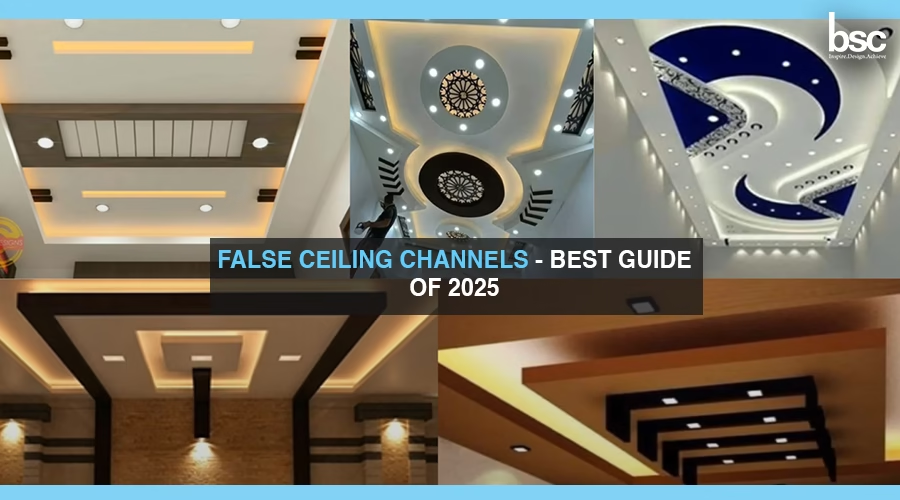
False ceiling channels form the structural foundation of any modern ceiling system, and most people are unaware of the engineering history behind the boards’ visual finish. These channels form the metal structure that helps keep the ceiling smooth, stable, and aligned for years. In commercial spaces such as offices, retail stores, hospitals, educational institutions, airports, restaurants, IT parks, etc., false ceilings are not only aesthetically pleasing but also serve as performance systems. They impact acoustics, combustibility, lighting integration, and durability.
The correct choice of channels, thickness, material, and installation method can ensure a ceiling’s longevity for 5 or 25 years. This manual provides all the information you need about false ceiling channels, technical specifications, installation science, and more.
Key Benefits:
- Increases coherence and lightness.
- Enhances the bonding of ceiling boards.
- Helps maintain lighting and environmental air conditioning.
What Are False Ceiling Channels?
False ceiling channels are rolled metal profiles used to create a suspended grid beneath the main building slab. They serve as the basic framework onto which gypsum board, acoustic tiles, metal panels, or cement board are nailed. Without channels, ceiling boards would not be aligned, level, or supported.
These slopes are highly machined to be extremely strong, straight, and corrosion-resistant. They are also used to distribute the ceiling load evenly throughout a room and allow for the installation of equipment such as lights, air diffusers, and sprinkler heads without any bends or cracks.
Functions of False Ceiling Channels:
- Carry the full load of the ceiling boards.
- Always keep things straight.
- Provide strong support for lights, ducts, and wiring.
- Reduce sound transmission by decoupling.
- Increase safety during slab vibrations or movement.
False ceiling channels are a very important part of a building. False ceiling channels are small in size, though very important in their work.
Why False Ceiling Channels Matter
The effectiveness and quality of its channel makeup are crucial to the long-term performance of a false ceiling. While boards determine the visual appearance, channels determine whether the ceiling will remain crack-free, stable, and straight for the next ten years.
High-quality channels guarantee that the ceiling will not bend, distort, or sag over time. They also improve acoustic performance by reducing vibrations and avoiding direct contact between the slab and the ceiling. Channel quality is even more critical in commercial interiors where lighting, HVAC ducts, speakers, and sprinklers are installed within the ceiling, making it even more crucial for safety and performance.
Why Channels Are Critical:
- Reduces warping and cracking of gypsum boards.
- Stands upright even in large rooms.
- Withstands the additional load of electrical and HVAC equipment.
- Maintains fire-resistant ceiling systems.
- Extends life cycle – corrosion-resistant and moisture-resistant.
The right channel system will keep your roof functioning perfectly for years.
Types of False Ceiling Channels
False ceiling systems have several types of channels, depending on the load, layout, and design of the ceiling. Each channel contributes to the structural grid in a specific way.
Main Channels
These are the heavy-duty channels that run throughout the room. They contain secondary channels and help distribute the load.
Furring Channels
These are also called secondary channels and run perpendicular to the main channels, extending to support gypsum or acoustic boards.
Perimeter Channels / Angle Channels
These are attached to the wall to determine the ceiling height and provide edge support.
Top Hat / Ceiling Sections
Used in more sophisticated ceiling products that require additional reinforcement or coating.
Z & Omega Channels
Commonly used in acoustic and drywall construction where separation or space is needed.
Applications:
- Gypsum ceilings
- Metal ceilings
- Acoustic panel ceilings
- Industrial or heavy-duty ceilings
Knowing the types will help you choose the right structure.
Materials Used in Manufacturing
The effectiveness of roof channels depends largely on the metal used. The required coating and material strengths vary depending on the situation.
1. Galvanized Iron (GI Steel)
This is the most common material used. It is strong, inexpensive, and highly corrosion-resistant due to its zinc coating.
2. Aluminum
It is lightweight and rust-resistant, making it suitable for use in high-humidity areas such as bathrooms, coastal buildings, and basements.
3. Galvalume Steel
A high-end product with both zinc and aluminum coatings, offering high levels of corrosion resistance and durability.
4. Stainless Steel
Used in chemical or industrial plants where high durability is required.
Material Selection Factors:
- Humidity level in the building
- Lifespan requirement
- Load-bearing needs
- Fire rating specifications
Using the right material is the best way to ensure a safe, durable roof.
Standard Sizes & Technical Specifications
False ceiling channels have standardized dimensions to ensure they match the boards, clips, and installation systems. These dimensions directly impact the strength and performance of the ceiling.
Common Sizes:
- Length: 8 feet, 10 feet, 12 feet
- Thickness: 0.35 mm, 0.45 mm, 0.55 mm, 0.80 mm
- Coating: 80-275 GSM Zinc Protection
- Shapes: C-shaped, U-shaped, Z-shaped, and Top-Hat
Technical Factors:
- Straightness tolerance
- Load-bearing capacity
- Galvanization thickness
- Flexural strength
- Dimensional accuracy
The higher the gauge and thickness, the greater the resistance to bending and sagging. Premium brands are manufactured to strict international roll-forming tolerances to ensure perfectly aligned ceilings.
Components Used Along With Channels
Channels aren’t the only components needed for a strong false ceiling system. Several supporting components guarantee durability, balance, and stability. These components connect the channels and raw slabs, strengthen the grid, and support fixtures such as lighting or HVAC diffusers.
Most notable are suspension rods, anchor fasteners, connecting clips, and wall angles. These play a vital role in keeping the grid stable and the ceiling level even after years of use. Additionally, accessories such as tie wires, intermediate cleats, and nut-bolt assemblies help maintain alignment during installation.
Common Components Used:
- Suspension Rods: Transfer the ceiling load to the slab
- Anchor Fasteners: Fix the suspension system to concrete
- Channel Clamps & Hangers: Lock main and furring channels
- Perimeter Angles: Provide edge support around walls
- Intermediate Clips: Maintain spacing & prevent sagging
These elements need to be coordinated with the channel brand to ensure system stability.
Step-by-Step False Ceiling Channel Installation
The foundation of a durable false ceiling is a well-organized channel system. Installation begins by using laser equipment to mark the ceiling level and accurately mark the entire room. L-angles are installed on the walls, and after perimeter leveling is complete, the structure’s height is determined.
Suspension anchors are then drilled into the slab at equal distances and connected to vertical rods. These rods hold the main channels, which are then fitted together with cleats or clips. These channels are installed vertically to form secondary, or furring, channels for board installation.
Installation Steps:
- Laser marking and leveling.
- Repair of wall perimeter channels.
- Anchoring of slab suspension rods.
- Equally spaced main channels.
- Interlocked secondary channels.
- Repair of gypsum, acoustic, or metal boards.
- MEP construction of lighting, HVAC, and fire systems.
Correct installation reduces future problems such as cracks, looseness, and misalignment.
Load-Bearing, Weight & Structural Performance
The load-bearing capacity of false ceiling channels is crucial to their strength. Commercial ceilings may house lighting fixtures, projectors, HVAC diffusers, speakers, and cables, as well as gypsum board. Therefore, channels must be designed to withstand both static and dynamic loads.
Heavy channels—those with a diameter of 0.55 mm and greater—can be used in high-load situations. Their stiffness and straightness minimize deflection, ensuring the ceiling remains in place despite motion, pressure, and mechanical vibration. The distribution of loads between the primary and secondary channels also determines overall performance.
Factors Affecting Load Performance:
- GSM coating metal thickness.
- Board thickness (12 mm/15 mm gypsum)
- Other loads caused by fixtures.
- Humidity affects metal expansion.
- Channel separation and separation between channels and suspension points.
Depending on design and environment, premium channels can carry loads of 18-40 kg/m2.
Acoustic Behavior & Soundproofing Benefits
False ceiling channels significantly contribute to the acoustic performance of commercial premises, especially conference rooms, theaters, classrooms, and offices. Separating the ceiling and main slab through channels substantially reduces vibration and sound transmission, providing a more pleasant interior environment.
This is because the space formed between the building board and the slab acts as a sound barrier, especially when filled with mineral wool insulation. Perforations in acoustic channels further increase sound absorption, reducing echoes and improving sound clarity.
Acoustic Benefits:
- Minimizes sound transmission between levels.
- Reduces echo and reverberation.
- Facilitates acoustic insulation.
- Increases the privacy of meeting rooms.
Well-designed channel systems can achieve STC (Sound Transmission Class) ratings, providing high-quality sound control.
Fire-Resistance & Safety Compliance
Commercial ceilings must be fireproof. GI channels and fire-resistant gypsum board together provide a protective barrier that slows heat transfer in the event of a fire and prevents ceiling collapse. The channels are part of the structural design, ensuring the ceiling does not destabilize in high temperatures.
Brands like Knauf, Gyproc, and Everest rigorously test their channels before assembling fire systems, which are estimated to collapse in 30, 60, 90, or 120 minutes, depending on the brand. According to modern building codes, and sometimes due to lifesaving decisions in an emergency, this delay can be lifesaving.
Fire-Safety Features:
- Less distortion at high temperatures.
- Manufacturer-certified system testing.
- Fire compatibility with gypsum boards.
- Fire-rated gypsum boards are compatible with fire-resistant gypsum boards.
Adopting fire-rated channel systems is the best option as it guarantees a sense of security and comfort.
Moisture, Rust & Corrosion Protection
The biggest causes of false ceiling failure are moisture and humidity. As the channels rust, the rust weakens the affected portion, causing it to bend or warp the boards. Therefore, it’s essential to use rust-resistant finishes and high-GSM galvanized steel.
Rooms such as kitchens, toilets, basements, and coastal buildings often have high humidity levels, so using aluminum or high-GSM GI channels is advisable. Board Problems: To increase board lifespan, they must have good ventilation and moisture resistance.
Corrosion-Protection Methods:
- Zinc-coated GI steel (80-275 gsm)
- Powder-coated aluminum
- Galvalume steel (zinc-aluminum alloy).
- Waterproof roof boards
Corrosion-resistant channels will be more useful in ensuring long-lasting roofs in wet areas.
How Different Brands Manufacture Channels
Each brand has its own roll-forming equipment, steel grades, and tolerances, which directly impact the strength and stability of the channel. High-end brands pay close attention to quality control and maintain high dimensional accuracy throughout the roll-forming process. For example,
Knauf and Gyproc use imported steel coils with a high zinc GSM for added corrosion protection. Everest guarantees structural rigidity suitable for cement board roofs. Rockwool combines its insulation system with the channel system to achieve superior acoustic and fire performance.
Brand Differences Are Based On:
- Steel grade used
- Galvanization coating
- Dimensional tolerances
- Flexural testing & quality checks
- Fire and acoustic certification
- Clip and locking mechanism compatibility
Choosing a reliable manufacturer ensures consistent performance across the entire ceiling system.
Indian Market Trends in False Ceiling Channels
The Indian commercial ceiling market is rapidly evolving. With offices becoming more acoustically sensitive and visually modern, false ceiling infrastructure has become more technical and performance-driven.
Premium channel systems are gaining demand due to increasing awareness about fire safety, acoustic privacy, and long-term durability. There is also a rise in aluminum channels in humid regions and the growing use of seismic-safe systems in high-rise buildings.
Emerging Trends:
- Acoustic-focused channel systems
- Higher GSM galvanized steel
- Increased demand for fire-rated ceilings
- Machine-level precision roll-forming
- Integration with HVAC & smart lighting
- Seismic bracing frameworks
These trends demonstrate the shift from basic ceilings to advanced performance-driven systems.
Common Mistakes to Avoid During False Ceiling Channel Installation
Installing false ceiling channels may look simple, but small mistakes can cause long-term issues such as sagging, cracks, misalignment, or noise transmission. One of the biggest mistakes is incorrect channel spacing, where channels are placed too far apart or too close, affecting stiffness and load distribution. Another frequent error is using low-quality channels that bend or corrode, reducing ceiling life. Poor leveling is another critical issue—if channels aren’t perfectly aligned, the entire ceiling becomes uneven.
Below are major mistakes to avoid:
- Improper spacing of primary and secondary channels
- Not checking plumb and level alignment.
- Using non-branded or low-gauge GI channels
- Skipping moisture and termite checks
- Not tightening screws properly.
Ensuring each step follows the manufacturer’s recommended specifications dramatically improves longevity and finish. Skilled labour and branded materials together minimize structural and aesthetic problems.
Fire Safety & Acoustic Performance in False Ceiling Channels
False ceiling channels play an important role in improving fire resistance and acoustics when paired with the right boards and insulation materials. GI channels themselves are non-combustible, meaning they do not add to the fire load. When used with fire-rated boards from brands like Knauf or Gyproc, they create a barrier that slows down fire spread and provides additional evacuation time.
From an acoustic perspective, channels support the placement of Rockwool or glass-wool insulation, which helps reduce sound transmission. The spacing between ceiling layers also supports acoustic performance by creating an air cavity that absorbs noise.
Key factors that influence fire and acoustic performance:
- Thickness and quality of GI channels
- Type of insulation used (Rockwool highly recommended)
- Board quality (fire-rated or acoustic gypsum boards)
- Proper sealing of joints and edges
A well-designed channel framework significantly improves safety and comfort levels inside commercial interiors.
False Ceiling Channel Materials: GI, MS & Aluminum
\False ceiling channels are available in three primary materials: GI (Galvanized Iron), MS (Mild Steel), and Aluminum. GI channels are the most popular due to their durability, corrosion resistance, and lightweight strength—ideal for commercial spaces with long-term usage. They do not rust easily and maintain structural integrity even in humid environments.
MS channels are stronger but prone to corrosion if not treated, making them less preferred for interior ceiling systems. Aluminum channels are extremely lightweight and corrosion-proof but costlier, making them suitable for premium interiors where longevity and aesthetics matter more than budget.
Comparison at a glance:
- GI Channels: Best balance of strength, price, and durability
- MS Channels: Strong but corrosion-prone
- Aluminum Channels: Lightweight and premium, but expensive
Most contractors and brands use GI channels as the industry standard for false ceilings in offices, malls, and retail spaces.
Channel Corrosion & Moisture Resistance
Corrosion is one of the biggest risks to metal channels, especially in bathrooms, basements, coastal areas, and places with high humidity. GI channels are coated with a zinc layer that provides long-term protection, but not all GI channels offer the same level of corrosion resistance. BSC Interiors always recommends using channels from brands like Knauf, Everest, and Gyproc, which come with certified anti-corrosion coatings.
Moisture resistance also depends on proper installation. If gaps are left near the ceiling or if water seepage is not identified early, moisture can enter the cavity and damage both boards and channel frames.
To avoid moisture-related damage:
- Use high-galvanized coatings (G90 or above)
- Avoid drilling unnecessary holes in channels.
- Conduct pre-installation moisture testing.
- Use moisture-resistant boards in wet areas.
Good quality anti-corrosion GI channels ensure long functional life and reduce maintenance costs.
Earthquake-Resistant False Ceiling Channel Installation
In seismic zones, false ceiling channels must be installed with additional safety measures to prevent collapse during vibrations. Earthquake-resistant installations require elastic suspension systems that allow the ceiling to move without breaking. GI channels with higher tensile strength perform better during dynamic movement.
Installers also use seismic bracing wires to add rigidity. These wires prevent the entire ceiling plane from shaking excessively. Channel spacing is reduced slightly in seismic designs to improve stability. Brands like Knauf and Gyproc provide specialized seismic-ceiling guidelines for safety-compliant installations.
Essential features for seismic-safe ceilings:
- Use of resilient hangers
- Closer channel spacing
- Cross-bracing wires
- Lightweight boards for reduced load
- Shock-absorbent fasteners
Following seismic installation standards ensures long-term safety, especially in commercial and public buildings.
Energy Efficiency & HVAC Impact of False Ceiling Channels
False ceiling channels indirectly influence the energy efficiency of a building by creating a controlled air cavity between the structural ceiling and the gypsum board. This cavity reduces the volume of air that needs to be cooled or heated, allowing HVAC systems to work more efficiently. As a result, energy bills can decrease, especially in commercial spaces like corporate offices, retail stores, and showrooms where AC runs for long hours.
Channels also help in the integration of insulation materials, such as Rockwool, which strengthens thermal resistance. This combination reduces heat gain in the summer and heat loss in the winter.
Additional ways false ceiling channels improve energy efficiency:
- Help in the uniform distribution of air-conditioning ducts
- Reduce load on HVAC units due to lower conditioned volume.
- Create pathways for installing LED lighting, minimizing heat production.
A well-designed false ceiling system, supported by quality channels, contributes significantly to long-term sustainability and operational cost savings.
Cost of False Ceiling Channels: Price Breakdown
The price of false ceiling channels depends on material quality, galvanization levels, brand, thickness, and regional market variations. On average, GI channels are the most cost-effective option because they offer durability without significantly increasing project costs.
A typical price breakdown includes:
- GI Channels (0.35–0.50mm): Budget-friendly, widely used
- Heavy Gauge Channels: Higher price but stronger load capacity
- Premium Aluminum Channels: Most expensive, used in high-end interiors
- Accessories: Connecting clips, hangers, angle sections, screws
Costs also vary depending on labor charges and installation complexity. Double-layer ceilings, curved designs, and acoustic-treated ceilings require additional channels, which increase material costs. However, investing in branded channels from Knauf, Gyproc, or Everest ensures better performance, reduced maintenance, and longer service life—making them more cost-effective in the long run.
Comparison of Standard vs. Premium False Ceiling Channels
Standard false ceiling channels are suitable for general use, offering basic structural support and acceptable durability. They are widely used in residential areas and budget commercial projects. Premium channels, on the other hand, provide superior strength, high galvanization, perfect dimensional accuracy, and longer lifespan.
Key differences include:
- Strength: Premium channels are more rigid and sag-resistant.
- Coating: Higher zinc coating for corrosion protection.
- Uniformity: Better straightness and thickness consistency.
- Load Capacity: Capable of supporting heavy acoustic boards, lights, and ducts.
Premium channels are ideal for offices, malls, hospitals, studios, and hotels where long-term stability matters. Although they cost more upfront, their reliability reduces repairs and ensures a flawless finish, especially when paired with high-quality gypsum board.
If you want to know about the PVC False Ceiling then you can click on the below button.
Environmental Sustainability of False Ceiling Channels
Sustainability is becoming a priority in commercial projects, and false ceiling channels contribute positively when sourced responsibly. GI and aluminum channels are fully recyclable, reducing environmental impact. Many manufacturers, like Knauf and Gyproc, follow environmentally certified processes for producing metal profiles.
False ceiling systems also support sustainability through:
- Allowing the installation of energy-efficient lighting systems
- Supporting acoustic insulation that improves indoor comfort
- Enhancing thermal performance, reducing HVAC load
Additionally, using recyclable materials reduces construction waste. The lightweight nature of channels also lowers transportation emissions. Choosing branded channels ensures compliance with green building standards such as IGBC and LEED. Overall, false ceiling channels play an important role in modern eco-friendly construction.
Comparison of False Ceiling Channels by Popular Brands
Different brands offer different strengths in their channel product lines. Knauf is known for premium-quality GI channels with superior zinc coating and perfect straightness. Gyproc (Saint-Gobain) offers reliable channels widely used in commercial projects with excellent compatibility with gypsum boards. Everest provides durable and cost-effective metal frames ideal for large-scale projects.
Key comparison points:
- Knauf: Best for premium, long-life installation
- Gyproc: Balanced performance, widely available
- Everest: Cost-effective for large projects
- Rockwool (Insulation Partner): Supports channels with superior acoustic/fire insulation.
Each brand caters to different price segments and requirements, but all of them deliver high-performance products suitable for BSC Interiors’ commercial clientele.
Maintenance Tips for Long-Lasting False Ceiling Channel Systems
A well-installed false ceiling channel system can last many years, but regular maintenance ensures stability and appearance. The most important part of ceiling maintenance is checking for moisture seepage, as water leakage can weaken channels and cause stains on gypsum boards. Regular inspection of HVAC ducts and plumbing lines also reduces the risk of hidden damage.
Other essential maintenance practices include:
- Tightening loose screws or fittings
- Inspecting joints for minor cracks
- Cleaning ceiling surfaces to prevent dust buildup
- Repainting or refinishing boards every few years
In commercial spaces, maintenance should be done twice a year, especially in areas with high foot traffic or frequent HVAC filter changes. A proactive maintenance approach ensures the ceiling retains its structural integrity and aesthetic finish over time.
Custom Shapes & Curved False Ceiling Channel Frameworks
Modern interiors often include curved, floating, or abstract ceiling shapes that require special channel frameworks. These designs use flexible GI perimeter channels and adjustable hangers that allow bending and shaping without compromising strength. Architects prefer such frameworks for hotels, showrooms, lounges, and creative offices looking to create signature ceiling aesthetics.
Curved ceiling channels must be installed with precision so the gypsum boards align smoothly without cracks. Skilled installers use markings, templates, and laser tools to achieve flawless curves.
Custom false ceiling designs support:
- Floating ceiling panels
- Circular or semi-circular designs
- 3D ceiling layers
- Indirect ambient lighting cavities
With the right materials and expertise, any architectural concept can be brought to life using flexible channel systems.
Load-Bearing Capacity: How Much Weight Can Channels Support?
False ceiling channels are designed to support gypsum boards, insulation, and light fixtures within safe limits. GI channels typically support 10–15 kg/m² depending on their thickness and spacing. Standard lighting fixtures are safe to hang directly through the ceiling frame, but heavier objects like chandeliers must be anchored to the main RCC slab instead of the channel system.
Load capacity depends on:
- Gauge thickness (0.35mm to 0.50mm)
- Spacing between primary and secondary channels
- Type of hangers used
- Quality of connecting clips
Well-installed channels can support acoustic panels, ducting, and multiple layers of gypsum boards. For heavy commercial ceilings, premium-grade channels from brands like Knauf and Gyproc ensure maximum rigidity and safety
Integrating Lights, AC Ducts & Speakers with False Ceiling Channels
One of the biggest advantages of false ceiling channels is the ability to conceal services like lights, air-conditioning ducts, sprinklers, and speakers. The channel framework provides a strong base for running electrical wiring safely and neatly. Recessed spotlights, LED strips, and linear lights fit seamlessly into gypsum ceilings without visible fixtures.
Key integration possibilities include:
- Concealed AC ducts for uniform cooling
- Speaker systems for offices, theatres, or conference rooms
- Fire sprinklers and safety sensors
- Cove lighting for ambient effects
Coordinating between electricians, HVAC teams, and carpenters ensures the channel layout supports all utilities without compromising the structure. Proper planning prevents rerouting or extra cutting after installation.
False Ceiling Channels for Hospitals, Schools & Commercial Spaces
Different sectors require different ceiling performance levels. In hospitals, false ceiling channels must support hygienic boards, anti-bacterial coatings, and space for medical gas pipelines. In schools, ceilings need acoustic solutions that improve classroom clarity and reduce echo. Commercial offices require channels compatible with heavy lighting and air-conditioning layouts.
Sector-wise considerations:
- Hospitals: Fire-rated boards, clean-room ceilings
- Schools & Universities: Acoustic insulation for better focus
- Retail Stores: Lightweight channels for fast installation
- Corporate Offices: Support for lighting grids and HVAC ducts
BSC Interiors provides channel-based ceiling solutions tailored to the performance needs of each sector, ensuring safety, comfort, and durability.
Safety Standards & Certifications for False Ceiling Channels
False ceiling channels must meet industry safety standards to ensure durability, fire resistance, and structural stability. Manufacturers follow specifications such as ASTM, BS, and IS standards for metal thickness, galvanization levels, and load-bearing capacity. Certified channels provide assurance that the metal frames can withstand long-term environmental conditions without deforming or corroding.
Important certifications include:
- IS 277 for galvanized steel sheets
- ASTM C645 for non-structural metal framing
- Fire safety certifications for use with fire-rated boards
- Corrosion resistance certifications
Using certified channels ensures compliance with building codes, especially in commercial and public buildings. BSC Interiors always recommends branded, accredited materials for long-term reliability and safety.
Signs of a Poor-Quality False Ceiling Channel Installation
A poorly installed false ceiling channel system can show visible signs early on. One of the most common indicators is visible sagging in the ceiling surface caused by loosely fitted or weak channels. Another sign is misalignment—uneven joints or shadows indicate improper leveling. Cracks in board joints may also appear due to incorrect channel spacing or loose screws.
More signs of poor installation:
- Hollow noise when tapping the ceiling
- Visible gaps near corners or wall joints
- Board edges are not sitting flush on channels.
- Rust spots indicating low-quality material
Identifying these issues early helps avoid major repairs later. A skilled installer and branded channels ensure a smooth, durable ceiling finish.
Future Trends in False Ceiling Channel Design
The future of false ceiling channels is moving towards systems that are lighter, stronger, and easier to install. Many brands are developing high-galvanization coatings to increase lifespan and reduce corrosion in humid environments. There is also a rising demand for modular ceiling frames that allow quick assembly and disassembly, ideal for commercial spaces that are frequently remodeled.
Emerging trends include:
- Pre-engineered modular frames
- Curved and flexible channels for creative designs
- Integrated acoustic and lighting-compatible frames
- Eco-friendly and recyclable materials
Technology is also enabling laser-guided installation tools for improved accuracy. The future promises more durable, faster, and aesthetically advanced ceiling channel systems.
Expert Installation Tips from BSC Interiors
With years of expertise in commercial interiors, BSC Interiors follows a structured approach to ensure flawless installation of false ceiling channels. The process begins with precise measurement using laser tools to ensure linearity and accurate leveling. The team always chooses heavy-duty, certified GI channels from reputed brands to guarantee long-term performance.
Key expert tips:
- Always check the RCC slab height before layout
- Maintain consistent spacing between primary and secondary channels.
- Use corrosion-resistant screws and hangers.
- Avoid cutting channels unnecessarily.
- Ensure all electrical and HVAC planning is completed before closing the ceiling.
These best practices not only improve durability but also reduce maintenance requirements, making projects more efficient and cost-effective.
BSC Interiors Channel Partners: Knauf, Everest, Rockwool & Gyproc
BSC Interiors partners with some of the most trusted global brands in false ceiling materials to ensure premium-quality installations. Knauf provides world-class GI channels with exceptional surface finish and high tensile strength. Gyproc (Saint-Gobain) is known for its reliable, fire-resistant gypsum boards and channel systems trusted in commercial projects worldwide.
Everest delivers cost-effective and durable metal framing materials suitable for large corporate and retail projects. Rockwool, a leader in insulation, ensures superior acoustic and fire performance when paired with ceiling channels.
Benefits of choosing BSC Interiors’ partner brands:
- High-quality, certified metal channels
- Better fire and acoustic performance
- Longer lifespan and corrosion resistance
- Perfect compatibility with gypsum boards and insulation
With these partnerships, BSC Interiors guarantees premium execution, durability, and industry-standard performance across all ceiling installations.
Conclusion: Why False Ceiling Channels Matter for Modern Interiors
False ceiling channels may be hidden behind gypsum boards, but they play one of the most critical roles in modern interior design. They define the strength, alignment, and durability of the entire ceiling structure. Well-made channels ensure that lighting, air-conditioning ducts, speakers, and insulation integrate smoothly without compromising aesthetics.
In commercial spaces, where longevity and performance matter most, high-quality GI channels from trusted brands like Knauf, Gyproc, Everest, and Rockwool insulation partners become essential.
Investing in premium channels also eliminates common issues like sagging, cracks, uneven surfaces, and corrosion. When installed with proper spacing, leveling, and bracing techniques, they create a ceiling that stays stable for many years.
For businesses seeking elegant, functional, and safe interiors, choosing the right channel system—and the right installation partner—makes all the difference. With its expertise and certified brand collaborations, BSC Interiors ensures every project delivers lasting value, precision, and superior performance.