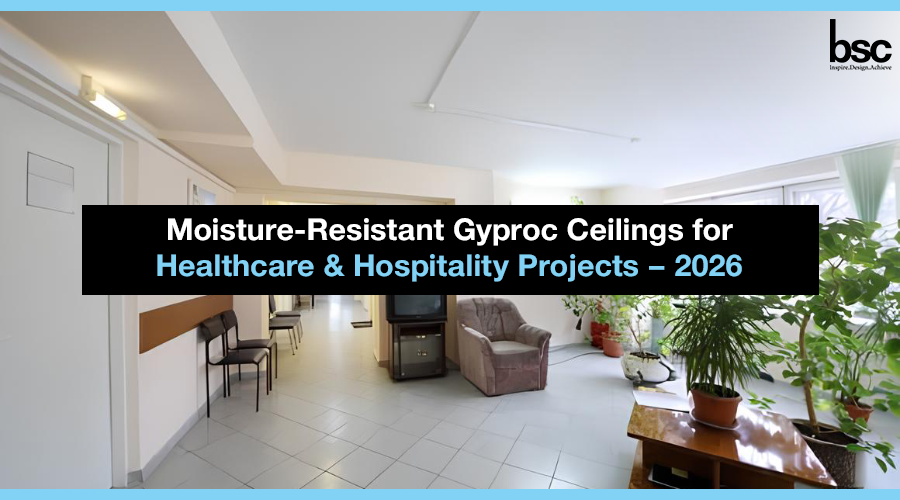
Healthcare and hospitality projects are very different from ordinary commercial interiors. A hospital ceiling is not selected only for design. It must support hygiene, maintenance, service access, comfort, and long-term reliability. A hotel ceiling is also not only about aesthetics. It must handle air-conditioning, lighting, moisture exposure, guest comfort, and a premium finish across different areas of the property.
This is why moisture-resistant ceiling materials have become important in 2026. Many hospitals, clinics, diagnostic centers, hotels, resorts, restaurants, banquet halls, and serviced apartments need ceiling systems that can perform better in internal areas where humidity and moisture may become a concern.
Gyproc moisture-resistant ceiling solutions are widely considered for such spaces because they offer the clean look of gypsum along with better resistance to moisture-prone internal conditions. When selected and used correctly, they help project teams create ceilings that look neat, stay stable, and support the practical needs of healthcare and hospitality interiors.
Based on BSC Interiors’ experience in supplying ceiling materials for commercial interior projects across India, the right ceiling material should never be selected only by appearance. It should be selected after considering moisture exposure, hygiene needs, acoustic comfort, fire safety, maintenance access, lighting design, HVAC coordination, and long-term project performance.
This blog explains how moisture-resistant Gyproc ceilings support healthcare and hospitality projects, where they can be used, what buyers should check before purchase, and how BSC Interiors helps architects, contractors, procurement teams, builders, and project owners source the right ceiling materials.
What Are Moisture-Resistant Gyproc Ceilings?
Moisture-resistant Gyproc ceilings are gypsum ceiling systems made using boards or tiles that are designed to perform better in moisture-prone internal areas compared to regular gypsum boards. These materials generally have moisture-repellent properties that help them resist the effect of dampness in suitable internal applications.
It is important to understand one thing clearly. Moisture-resistant does not mean waterproof. These ceilings are not meant to replace waterproofing systems, nor should they be exposed to direct water leakage or continuous water contact. Their role is to perform better in internal spaces where moisture, humidity, air-conditioning, cleaning routines, or damp conditions may affect ordinary ceiling materials.
In healthcare and hospitality projects, this difference matters. A ceiling near a hospital washroom corridor, hotel washroom lobby, restaurant back area, spa zone, utility passage, or kitchen-adjacent space may face more moisture than a normal office cabin. In such cases, moisture-resistant ceiling materials can provide better long-term reliability when used with correct specifications and installation practices.
Why Moisture-Resistant Ceilings Matter in Commercial Interiors
Moisture is one of the most common reasons ceilings lose their finish. In many projects, the problem does not appear immediately. The ceiling may look perfect on the day of handover, but after a few months, stains, cracks, sagging, uneven joints, or surface damage may begin to show.
Healthcare and hospitality spaces are more sensitive to these problems because they operate daily and cannot afford frequent repairs. A hospital corridor ceiling with stains can affect the perception of hygiene. A hotel lobby ceiling with cracks can affect the guest experience. A restaurant ceiling with damp patches can damage the brand image. A banquet ceiling with uneven surfaces can make the whole interior look poorly maintained.
Moisture-resistant Gyproc ceilings help reduce such risks when they are used in the right areas with proper planning. They support a cleaner finish and better durability in moisture-prone internal conditions. For project teams, this means fewer maintenance concerns and better long-term appearance.
In commercial interiors, the ceiling is not just above the head. It is part of the user experience. Patients, guests, visitors, employees, and customers may not always notice a good ceiling, but they will definitely notice a damaged one.
Best Materials and Products for This Use Case
For healthcare and hospitality ceilings, the material selection should be based on area type. Not every zone needs the same ceiling material. A hospital reception ceiling, patient room ceiling, diagnostic corridor ceiling, hotel lobby ceiling, guest room ceiling, spa ceiling, and restaurant ceiling all have different requirements.
Gyproc moisture-resistant boards can be considered for internal wet or moisture-prone areas where a gypsum ceiling finish is required. For grid ceiling applications, Gyproc ceiling tiles with moisture-resistant, clean, hygienic, or maintenance-friendly features may be suitable depending on the project requirement.
In healthcare spaces, hygienic and easy-to-maintain ceiling surfaces are often preferred. In hospitality spaces, the ceiling must balance appearance with performance. For example, a luxury hotel lobby may need a seamless gypsum look, while a service corridor may need a more practical modular ceiling system.
The right product choice should always be made after checking site conditions, ceiling height, HVAC layout, lighting plan, maintenance access, and moisture exposure.
Comparison Table: Ceiling Material Selection for Healthcare and Hospitality
|
Ceiling Requirement |
Suitable Ceiling Direction |
Why It Matters |
|
Moisture-prone internal areas |
Gyproc moisture-resistant board or suitable MR ceiling material |
Helps improve ceiling performance in damp internal conditions |
|
Hospital corridors |
Modular or gypsum ceiling systems with maintenance access |
Supports services, lighting, and long-term upkeep |
|
Hotel rooms |
Gypsum ceiling with moisture-resistant planning where needed |
Provides clean finish and premium appearance |
|
Restaurant and café areas |
Moisture-aware gypsum or tile ceiling system |
Helps manage humidity, cleaning routines, and lighting |
|
Spa and wellness areas |
Moisture-resistant ceiling materials with proper ventilation |
Reduces risk of dampness-related ceiling issues |
|
Back-of-house service zones |
Practical ceiling tiles or moisture-resistant boards |
Supports durability and maintenance |
|
Premium hospitality lobbies |
Gypsum ceiling with proper service planning |
Gives seamless design and refined finish |
Applications in Healthcare Projects
Healthcare projects need ceiling materials that support hygiene, durability, and maintenance. Hospitals and clinics have many service lines above the ceiling, including electrical wiring, HVAC ducts, fire systems, data cables, medical support systems, and lighting. A ceiling system should allow these services to be planned properly.
Moisture-resistant Gyproc ceilings can be useful in selected healthcare areas where internal moisture conditions are a concern. These may include washroom-adjacent corridors, patient room ceilings, consultation areas, diagnostic waiting zones, nursing stations, staff areas, pharmacy zones, and administrative spaces.
In hospitals, the ceiling also affects the feeling of cleanliness. Patients and visitors expect the space to look well-maintained. Even a small damp mark or broken ceiling corner can create doubt about the quality of the facility. This is why material selection should focus on long-term performance, not only immediate cost.
For healthcare projects, the ceiling should be selected after understanding cleaning requirements, air-conditioning load, service access, moisture conditions, and footfall. A practical ceiling material can help the facility team maintain the space more easily after handover.
Applications in Hospitality Projects
Hospitality interiors are highly experience-driven. Guests may not understand which ceiling material has been used, but they can feel the difference between a well-finished space and an ordinary one. A hotel, resort, restaurant, café, banquet hall, or serviced apartment must look fresh and premium every day.
Moisture-resistant Gyproc ceilings are useful in hospitality projects because many areas face controlled humidity, air-conditioning changes, guest washroom movement, food-service activity, and cleaning routines. Hotel rooms, corridors, lobbies, washroom-adjacent zones, spa areas, restaurants, banquet halls, and back-of-house spaces may all require careful ceiling planning.
In guest-facing areas, the ceiling must support beauty and comfort. In service areas, it must support durability and maintenance. In restaurants and cafés, the ceiling must work with lighting, ventilation, and design. In spa and wellness spaces, moisture awareness becomes even more important.
The hospitality sector cannot afford poor finishing. A ceiling stain in a guest corridor or restaurant can immediately affect brand perception. Choosing moisture-resistant ceiling materials in the right zones helps reduce this risk.
Industry-Wise Applications
|
Industry / Space |
Common Ceiling Challenge |
How Moisture-Resistant Gyproc Ceilings Help |
|
Hospitals |
Hygiene, services, damp areas, maintenance |
Supports cleaner finish and better suitability for moisture-prone internal areas |
|
Clinics |
Compact spaces, AC, washroom proximity |
Helps maintain a neat ceiling appearance |
|
Diagnostic Centers |
Service lines, lighting, patient comfort |
Supports organized ceiling planning |
|
Hotels |
Premium finish and guest experience |
Gives smooth design with better moisture-aware material selection |
|
Restaurants |
Humidity, cleaning, lighting, ventilation |
Supports durability in selected internal areas |
|
Banquet Halls |
Lighting, AC, large ceiling spans |
Helps create refined ceiling designs with proper planning |
|
Spa & Wellness Areas |
Higher humidity and comfort needs |
Supports better ceiling reliability when used with ventilation |
|
Serviced Apartments |
Long-term use and maintenance |
Gives a cleaner finish with practical performance |
Cost and Maintenance Factors
The cost of moisture-resistant Gyproc ceilings depends on several factors. The first factor is the type of board or ceiling tile selected. A standard gypsum board and a moisture-resistant board will not have the same cost because their performance purpose is different.
The second factor is the area of application. A small hotel room ceiling may have a different cost structure compared to a large hospital corridor or banquet hall. The third factor is design complexity. A plain ceiling, cove ceiling, layered ceiling, grid ceiling, or lighting-integrated ceiling will all require different planning.
Maintenance is also a major consideration. Healthcare and hospitality projects operate almost continuously. Repair work can disturb patients, guests, staff, and visitors. That is why choosing the right material at the beginning is often more practical than repairing issues later.
Buyers should also consider finishing materials, jointing quality, framing system, access panels, ventilation, and waterproofing in nearby areas. A moisture-resistant ceiling material can perform better only when the full system is planned correctly.
The cheapest material may reduce the first purchase cost, but if it leads to cracks, stains, sagging, or replacement, the total cost becomes higher later.
How to Choose the Right Ceiling Material Supplier
Choosing the right supplier is very important for healthcare and hospitality projects. These projects usually have strict timelines, multiple stakeholders, and high expectations for finish quality. A reliable supplier should not only provide material but should also understand product suitability.
Before finalizing a ceiling material supplier, project teams should check whether the supplier offers genuine branded materials, product availability, technical guidance, bulk quantity support, and experience in commercial project requirements.
The supplier should also understand different use cases. A ceiling for a hotel lobby is not the same as a ceiling for a hospital corridor. A restaurant ceiling is not the same as a spa ceiling. A patient room ceiling is not the same as a back-of-house service area.
A good supplier helps buyers avoid wrong product selection. They can guide whether moisture-resistant gypsum board, modular ceiling tile, acoustic ceiling, or another ceiling material is more suitable for the space.
Why BSC Interiors Is a Trusted Partner for Gyproc Ceiling Materials
BSC Interiors Private Limited is a trusted interior building materials distributor in India, supporting commercial projects with premium materials across ceilings, walls, flooring, sanitary ware, workspace furniture, lighting, plywood, laminates, and other categories.
For healthcare and hospitality projects, BSC Interiors helps architects, contractors, builders, procurement teams, facility managers, and project owners source the right ceiling materials based on project needs. The company understands that ceiling selection is not only about design. It is also about moisture resistance, hygiene, maintenance, service access, durability, lighting coordination, and long-term performance.
As a commercial ceiling material supplier, BSC Interiors supports Gyproc ceiling material requirements for hospitals, clinics, hotels, restaurants, resorts, banquet halls, serviced apartments, and other commercial spaces. The team can help project buyers understand where moisture-resistant Gyproc ceiling materials may be suitable and how to plan material selection according to area type.
This is especially useful for bulk purchase requirements. Large healthcare and hospitality projects often need ceiling materials across multiple floors, corridors, rooms, lobbies, and service zones. BSC Interiors helps simplify material sourcing by supporting product selection and supply coordination through trusted brand associations.
BSC Interiors’ Expert View
In healthcare and hospitality projects, moisture-related ceiling issues should be prevented at the material selection stage. Once a ceiling is installed and the space becomes operational, repairs are difficult, disruptive, and often expensive.
BSC Interiors believes the right ceiling decision should be based on the actual use of the space. If the area is close to washrooms, kitchens, service corridors, spa zones, or HVAC-heavy sections, moisture-resistant ceiling materials should be considered. If the area requires a premium finish, gypsum ceiling systems may be suitable. If maintenance access is important, modular ceiling options should be evaluated.
This is why BSC Interiors focuses on application-based material guidance. The goal is to help project teams choose the right product before the problem appears on site.
Common Mistakes to Avoid
One common mistake is assuming that all gypsum boards perform the same. Regular gypsum boards and moisture-resistant boards are meant for different conditions. Choosing the wrong material can affect long-term ceiling quality.
Another mistake is treating moisture-resistant material as waterproof. If there is direct leakage from the slab, plumbing line, or AC drain, the leakage must be fixed first. No ceiling board should be used as a substitute for waterproofing.
A third mistake is ignoring ventilation. In hospitality and healthcare spaces, ventilation, HVAC planning, and ceiling material selection should work together.
A fourth mistake is choosing material only by price. In large commercial projects, a lower initial material cost may lead to higher maintenance later.
A fifth mistake is not planning access panels. Healthcare and hospitality ceilings often have services above them. Maintenance access should be planned before installation.
Conclusion
Moisture-resistant Gyproc ceilings are a smart material choice for healthcare and hospitality projects where ceiling performance matters as much as appearance. Hospitals, clinics, hotels, restaurants, resorts, banquet halls, and serviced apartments need ceilings that can handle real operating conditions, not just look good at handover.
The right ceiling material can help improve long-term finish quality, reduce maintenance concerns, support hygiene expectations, and create a better experience for patients, guests, visitors, and staff.
For healthcare and hospitality projects, moisture-resistant ceiling materials should be selected carefully based on space type, humidity level, service access, lighting, HVAC planning, and maintenance needs.
If you are planning a healthcare, hospitality, or commercial project and need genuine Gyproc ceiling materials, BSC Interiors can help you choose the right moisture-resistant ceiling solutions for your requirement.