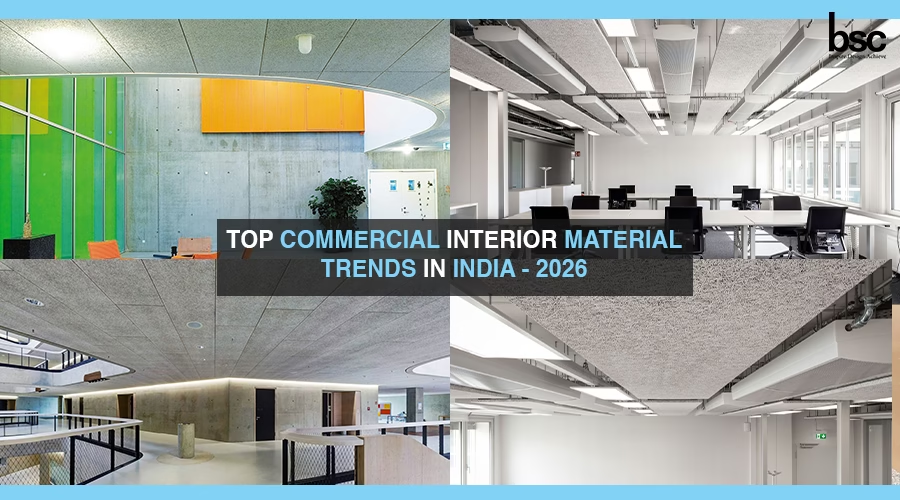
The commercial interior industry in India is entering a transformative phase in 2026. Across offices, retail spaces, hospitality environments, healthcare facilities, educational institutions, and large-scale corporate developments, interior material choices are evolving rapidly. Businesses are no longer selecting materials based only on visual appeal. Instead, they are focusing on smarter investments that support productivity, sustainability, employee well-being, durability, technology integration, and long-term cost efficiency.
India’s commercial infrastructure boom, combined with changing workplace expectations, has created demand for materials that are innovative, functional, and future-ready. As hybrid workplaces become more common, sustainability standards rise, and customer experience becomes central to brand identity, interior materials are playing a far more strategic role than ever before.
In 2026, commercial interior design is not simply about creating attractive spaces—it is about building environments that perform better, last longer, and represent business excellence. From advanced ceiling systems and acoustic panels to modular flooring, smart sanitary solutions, and high-performance wall finishes, the Indian market is embracing a new generation of interior materials.
This blog explores the most important commercial interior material trends shaping India in 2026 and how businesses can stay ahead by choosing the right products and partners.
Sustainability Is No Longer a Trend—It Is a Commercial Necessity
One of the biggest changes in commercial interiors is the shift toward environmentally responsible materials. Sustainability is no longer treated as a luxury feature reserved for premium projects. In 2026, it has become a standard expectation across modern commercial developments.
Businesses are increasingly prioritizing materials that reduce environmental impact while improving operational efficiency. Low-VOC products, recycled ceiling systems, eco-friendly flooring solutions, energy-efficient glass, and responsibly manufactured wall panels are becoming the preferred choice for architects and developers.
This shift is driven by multiple factors. Green building certifications are becoming more influential, companies are seeking stronger ESG performance, and employees are increasingly valuing healthier indoor spaces. Sustainable materials improve air quality, reduce maintenance costs, and support energy conservation.
For commercial projects in India, sustainability is now closely connected to reputation, compliance, and profitability. Whether it is a corporate office in Gurgaon, a retail outlet in Mumbai, or a healthcare facility in Bangalore, eco-conscious material choices are becoming central to long-term project success.
Acoustic Solutions Are Becoming Essential for Productivity-Focused Workspaces
As open-plan offices, collaborative hubs, and multifunctional commercial spaces continue to grow, sound management has become one of the most critical interior priorities in India.
In earlier years, acoustics were often overlooked or treated as secondary design concerns. However, in 2026, businesses understand that poor acoustic performance can negatively impact employee concentration, communication, and overall productivity.
This is why acoustic ceiling tiles, wall panels, baffles, and sound-absorbing partitions are seeing major demand in commercial interiors. Offices now require materials that reduce noise without sacrificing aesthetics. Educational institutions need sound clarity. Healthcare spaces need privacy. Hospitality environments need comfort.
Materials such as mineral fiber ceilings, perforated gypsum systems, fabric acoustic panels, and modular sound-control surfaces are now considered productivity tools rather than decorative upgrades.
For Indian businesses, investing in acoustic materials is becoming a direct investment in performance, employee well-being, and customer satisfaction.
Modular Flooring Is Transforming Commercial Spaces
Flooring in commercial spaces has moved far beyond traditional marble, ceramic, or single-surface solutions. In 2026, modular flooring systems are defining flexibility and functionality across India’s commercial interior market.
Carpet tiles remain one of the most popular choices for office spaces because they offer easy maintenance, quick replacement, acoustic advantages, and visual versatility. Luxury vinyl tiles are gaining attention for retail and hospitality because they combine durability with premium appearance. Raised flooring systems are increasingly common in technology-driven workspaces due to their cable-management capabilities.
Modular flooring gives businesses something traditional flooring often cannot—adaptability. As commercial spaces evolve, expand, or rebrand, modular systems allow for updates with minimal disruption.
This flexibility is especially valuable in India’s rapidly growing commercial landscape, where businesses require interiors that can adapt to changing operational needs.
Smart Materials Are Shaping the Future of Modern Workspaces
Technology is influencing every part of commercial design, and interior materials are no exception. In 2026, commercial spaces are integrating smarter materials that improve efficiency, hygiene, and workplace functionality.
Examples include sensor-enabled restroom fixtures, switchable privacy glass, anti-microbial laminates, integrated cable flooring, energy-efficient glass systems, and digital infrastructure-friendly ceiling systems.
These materials are particularly important in sectors such as IT, healthcare, hospitality, and premium corporate offices where technology and user experience intersect.
Smart materials are no longer futuristic concepts—they are becoming practical commercial standards. Businesses are using them to reduce maintenance, improve safety, optimize energy use, and create more responsive spaces.
As India’s business ecosystem becomes increasingly modernized, technology-integrated materials are setting new benchmarks for commercial interiors.
Wall Panels Are Becoming Strategic Design Assets
In 2026, walls are no longer treated as passive structural elements. They are becoming powerful tools for branding, acoustic management, moisture resistance, and visual storytelling.
Commercial spaces are increasingly adopting advanced wall solutions such as PVC panels, WPC systems, decorative laminates, textured surfaces, VOX cladding, and modular wall technologies.
These materials allow businesses to create spaces that are visually engaging while also supporting performance needs. For example, moisture-resistant wall panels are critical in healthcare and washrooms, while premium decorative surfaces are enhancing brand perception in retail and hospitality.
The ability to combine functionality with design has made wall panels one of the most influential material categories in commercial interiors today.
Biophilic Materials Are Creating Healthier Commercial Environments
The modern commercial environment in India is shifting toward wellness-oriented design, and this is driving the popularity of biophilic materials.
Biophilic design focuses on incorporating natural textures, earthy finishes, organic patterns, and materials that create stronger psychological connections to nature. Wood finishes, stone textures, natural lighting-compatible surfaces, green wall integrations, and nature-inspired aesthetics are increasingly popular in commercial projects.
This trend reflects a deeper understanding that interior environments impact human health, creativity, and comfort. In offices, biophilic materials can improve employee satisfaction. In hospitality, they create warmth. In retail, they enhance customer experience.
India’s 2026 commercial spaces are moving toward interiors that feel healthier, calmer, and more human-centered.
Premium Sanitary Solutions Are Elevating Commercial Standards
Commercial washrooms are no longer treated as purely functional spaces. In 2026, they are becoming key indicators of business quality, hygiene, and brand sophistication.
This has significantly increased demand for premium sanitary materials and advanced bathroom solutions. Businesses are prioritizing water-efficient fixtures, sensor-operated systems, touchless technology, anti-bacterial surfaces, and luxury sanitaryware.
KOHLER stands out prominently in this category, offering commercial solutions that combine performance, elegance, water conservation, and innovation. In premium offices, hospitality projects, malls, and institutional developments, KOHLER products are increasingly recognized for elevating washroom standards.
As hygiene expectations continue to rise, sanitary solutions are becoming one of the most strategic investments in commercial interior planning.
Why Choosing the Right Material Distributor Matters More Than Ever
As material categories become more advanced, sourcing decisions are becoming more complex. Commercial success now depends not only on choosing the right products but also on partnering with the right distributor.
A reliable distributor provides access to authentic brands, technical expertise, project guidance, scalable solutions, and long-term support. This is especially important in large commercial projects where timelines, quality standards, and budget efficiency are interconnected.
Material distribution is no longer about supply alone—it is about strategic project support.
BSC Interiors: Supporting the Next Generation of Commercial Interiors in India
In India’s evolving commercial design landscape, BSC Interiors has established itself as a trusted partner for premium interior building materials. As one of the leading distributors serving commercial spaces, BSC Interiors supports businesses, architects, and contractors with advanced material solutions tailored for modern infrastructure.
With expertise across ceilings, flooring, wall systems, acoustic solutions, and premium sanitary categories, BSC Interiors plays an important role in helping commercial projects align with 2026’s top material trends.
BSC Interiors is particularly recognized for offering trusted access to KOHLER solutions, making it a valuable partner for businesses seeking high-performance bathroom and sanitary systems that reflect quality, sustainability, and innovation.
For organizations building future-ready commercial spaces, BSC Interiors offers more than products—it offers reliability, expertise, and strategic value.
Conclusion: Building India’s Commercial Future Through Smarter Materials
The commercial interior material trends shaping India in 2026 clearly reflect a larger shift in business priorities. Sustainability, acoustic performance, flexibility, technology integration, wellness, and premium functionality are no longer optional—they are essential.
Commercial spaces today must work harder than ever before. They must support people, enhance operations, strengthen brand identity, and remain adaptable for the future.
From acoustic ceilings and modular flooring to smart walls and KOHLER sanitary systems, the future of Indian commercial interiors belongs to businesses that invest intelligently.
As India continues to expand its commercial infrastructure, the right material choices will define not just how spaces look, but how effectively they perform.
The next era of commercial interiors is here—and it is smarter, greener, more strategic, and more innovative than ever before. With the right materials and the right partners, businesses can create spaces that truly lead the future.