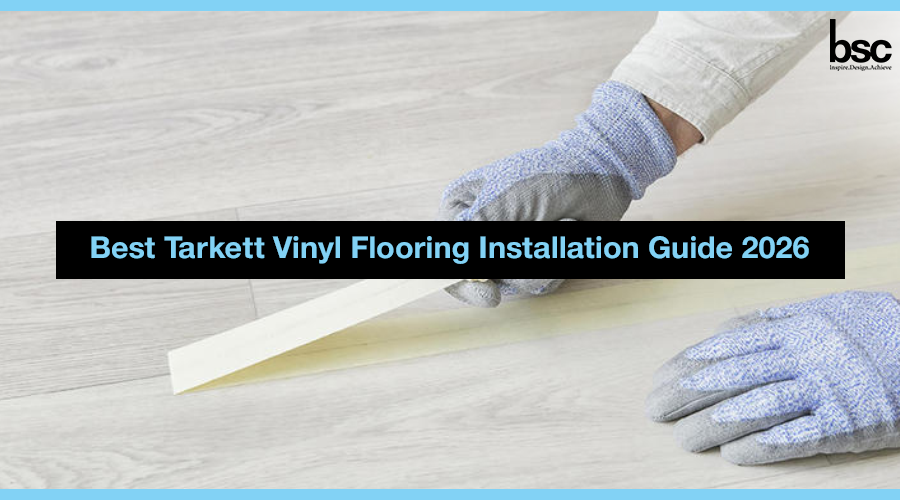
We get a version of the same call almost every week: someone has picked Tarkett for their next project, they know it’s a good product, but they’re not sure what actually happens between “we’ve chosen the flooring” and “the floor is down and looks right.” So this guide is less of a sales pitch and more of a walkthrough — what Tarkett Vinyl Flooring actually is, how a proper installation goes, what tends to drive the cost up or down, and what to actually check before you sign off on a supplier.
A quick note before we get into it: even the best vinyl flooring can go wrong if it’s installed badly. We’ve seen premium Tarkett product bubble within months — not because of the material, but because of a subfloor that wasn’t prepped properly. So installation quality matters just as much as the product you pick.
What Is Tarkett Vinyl Flooring, Exactly?
At a basic level, Tarkett Vinyl Flooring is a PVC-based resilient flooring product — built in layers, engineered to handle heavy use without falling apart or looking worn out too soon. It’s popular because it gives you a lot of the visual range of wood, stone, or tile, but without the maintenance headaches and at a fraction of the long-term cost.
Tarkett Flooring is made using European manufacturing standards, and it’s tested against international benchmarks for things like indoor air quality, slip resistance, and fire safety. That’s part of why you’ll see it specified so often in hospitals, schools, corporate offices, and airports across India — it’s not just about how it looks.
The Two Main Types of Tarkett Vinyl Floor
There are two broad categories, and picking the wrong one for your space is one of the more common mistakes we see.
Tarkett Homogeneous Vinyl Flooring — the color and pattern go all the way through the sheet, not just on the surface. That matters more than people expect: in a hospital corridor or lab that sees thousands of footsteps a day, surface wear on a homogeneous floor doesn’t expose a different-colored layer underneath. It also heat-welds cleanly, which is why you’ll see it specified almost by default in healthcare projects.
Tarkett Heterogeneous Vinyl Flooring — built in layers, with the design printed underneath a protective wear layer on top. This is what gives you those realistic wood-grain or stone-look finishes. It’s the go-to for offices, retail stores, and homes where the look matters as much as the durability.
Why Businesses Keep Choosing Tarkett Commercial Flooring
Commercial-grade Tarkett flooring isn’t just a nicer-looking version of the residential range. It’s built differently, for different problems.
It holds up under sustained foot traffic in a way a lot of cheaper alternatives don’t — we’ve had clients get 12-15 years out of a well-maintained commercial installation. The homogeneous ranges, in particular, are suited to environments where infection control actually matters, since seams can be fully heat-welded into a continuous, non-porous surface. There’s a real acoustic benefit too, especially in open-plan offices or multi-story buildings where footfall noise between floors becomes a genuine complaint. It’s also built to meet slip-resistance standards required in public buildings, and a lot of the newer ranges use recycled content, which helps on projects chasing LEED or other green building certifications.
That combination — performance plus compliance — is a big part of why architects and facility managers in India keep specifying Tarkett Flooring India for corporate and institutional work rather than going with a cheaper unbranded alternative.
How Tarkett Vinyl Flooring Installation Actually Works
Here’s the process, roughly in order. Depending on the site, some steps take longer than others — a large commercial floor with a lot of subfloor issues can add days to the timeline.
- Site assessment and subfloor prep. The team checks moisture levels, flatness, and general cleanliness of the base. This is where a lot of future problems get caught early — an uneven subfloor will telegraph through vinyl over time, sometimes months later, which is frustrating for everyone involved. Self-leveling compound gets used where needed, and moisture testing happens before anything else moves forward.
- Acclimatization. The vinyl sits in the room for roughly 24-48 hours before installation, letting it adjust to the local temperature and humidity. Skip this step and you risk expansion or contraction issues after the floor’s already down.
- Layout planning. Installers map out where seams will fall, trying to keep them out of high-visibility or high-moisture areas. For heterogeneous ranges with wood or stone-look patterns, this stage also involves getting the grain direction and pattern alignment right — otherwise it looks obviously “off” once installed.
- Adhesive application. The right adhesive depends heavily on the project. Commercial spaces generally need a stronger, moisture-resistant adhesive than a typical residential job.
- Laying the vinyl. Sheets or planks go down, get pressed firmly to remove air pockets, and are trimmed precisely at the edges.
- Seam welding (homogeneous ranges). For hospitals, labs, and similar spaces, seams are heat-welded into a single, sealed surface. This is really the step that makes homogeneous vinyl the standard choice for hygiene-sensitive environments.
- Finishing and inspection. Edges get sealed, skirting goes in, and the whole floor gets checked for bubbles, seam quality, and finish before we call it done.
Honestly, the single biggest cause of vinyl flooring failure we’ve seen in India isn’t the product — it’s step one and step four going wrong. Bad subfloor prep or the wrong adhesive will undo even the best material. If you’re hiring outside your usual supplier, it’s worth asking directly who’s doing the installation and whether they’re trained on the specific product line.
What Drives Tarkett Vinyl Flooring Cost in India
There’s no single per-square-foot number that applies across the board, because too many variables affect it:
The product range matters most — homogeneous and heterogeneous collections are priced differently, and within each there are multiple tiers. Wear layer thickness is another factor; a thicker wear layer costs more upfront but usually pays for itself in high-traffic zones by lasting longer.
Project scale plays in too — larger commercial orders tend to get better per-square-foot pricing than small residential jobs. Site conditions can move the number as well, since heavy subfloor prep adds cost before the flooring itself is even factored in. And installation complexity — heat-welding, intricate pattern matching, unusual room shapes — takes more skilled labor hours, which shows up in the final quote.
Because of all that, we’d steer you away from trusting a generic online estimate. A proper quote really needs a site visit.
What to Actually Check Before Picking a Tarkett Vinyl Flooring Supplier
Not every dealer selling Tarkett is equally reliable, even if the product itself is genuine. A few things worth asking directly:
Is the supplier an authorized distributor? This isn’t just paperwork — it affects whether your warranty is actually valid if something goes wrong later. Do they have their own trained installation team, or do they outsource to whoever’s available that week? Have they handled your specific project type before — a hospital installation and a retail fit-out require genuinely different expertise.
Can they show you completed projects, not just a product catalog? And what happens after installation — is there any maintenance support or warranty follow-through, or does the relationship end at handover?
Why BSC Interiors for Your Tarkett Vinyl Flooring Project
BSC Interiors is an authorized Tarkett distributor based out India, and we’ve worked on flooring projects across office, healthcare, education, retail, and sports sectors nationwide.
A few things that tend to matter to clients evaluating us:
Every product we supply is genuine, sourced directly through Tarkett’s authorized channel, with full manufacturer warranty backing — nothing gray-market. We’ve handled everything from hospital-grade homogeneous installations to design-heavy heterogeneous flooring for corporate offices and retail spaces, so we’re not learning your project type as we go.
Beyond Tarkett, we also carry Knauf, Gyproc, Armstrong, Interface, Kohler, Roca, Geberit, Grohe, Hindware, Steelcase, Somany, and Greenply — which means if your project needs more than just flooring, we can usually cover that under one roof instead of coordinating three vendors. We’re based in Okhla but deliver projects well beyond Delhi NCR.
And we don’t just sell whichever range has better margins — we walk clients through homogeneous vs. heterogeneous based on actual footfall and hygiene needs for their specific space.
Conclusion
Tarkett vinyl flooring has earned its place as one of the most specified resilient flooring solutions in India — and for good reason. Whether it’s homogeneous vinyl bringing infection control and dry-buff durability to a hospital, or heterogeneous vinyl giving a corporate office the design flexibility to match its brand, Tarkett’s range covers nearly every commercial and institutional use case without compromising on performance or lifecycle cost.
The bigger decision, though, often isn’t which Tarkett range to choose — it’s who you buy and install it through. Genuine product, correct sub-floor prep, proper heat-welding, and manufacturer-backed warranty support all depend on working with an authorized distributor rather than a reseller cutting corners. That’s where a partner like BSC Interiors makes the difference: pairing genuine Tarkett product with the sector experience and installation expertise needed to get a 15-20 year floor right the first time
Ready to Specify or Buy Tarkett Vinyl Flooring?
Whether you’re an architect finalizing specifications, a facility manager planning a renovation, or a business owner comparing flooring options — BSC Interiors can help you get it right the first time.
Get in touch with BSC Interiors today for:
- Genuine, warranty-backed Tarkett vinyl flooring — homogeneous & heterogeneous
- Free samples and technical datasheets for your project
- Expert installation by trained teams
- End-to-end support from specification to after-sales
Contact BSC Interiors |BSC Interiors Private Limited
Your project deserves flooring that performs for decades — not just looks good on day one.