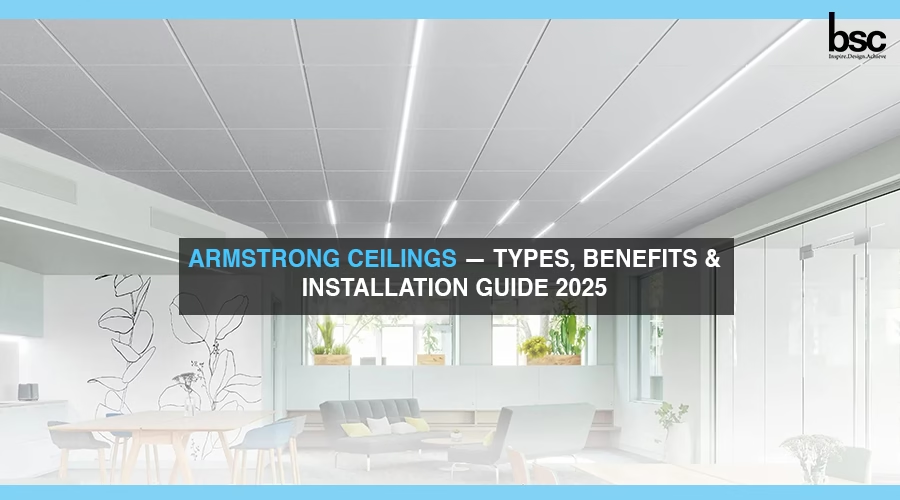
Imagine a ceiling that doesn’t just hide pipes: it controls noise, improves air quality, protects against moisture and fire, enhances building sustainability, and serves as a decorative element—all while being easy and affordable to install. That’s what Armstrong Ceilings promises businesses.
Armstrong offers a wide range of products, including mineral fiber, metal, wood, felt, and specialty panels, covering acoustics, durability, and aesthetics, whether for open-plan offices, hospitals, schools, and retail stores.
It’s all here in this post, including how to use the products, how specifications matter, how to select and specify the right system, and real-life tradeoffs compared to competitors so that you can make better design and purchasing choices.
What Are Armstrong Ceilings?
Armstrong Ceilings is one of the world’s most respected and innovative commercial ceiling design companies. A division of Armstrong World Industries, the brand is decades old and has been transforming architectural interiors through advanced ceiling and wall solutions that deliver superior acoustics, aesthetics, and durability.
Armstrong products are popular in offices, hospitals, schools, shopping centers, and hotels. They are highly effective in sound absorption, fire and life safety, and durability. The company places a strong focus on research and development, and each ceiling solution helps enhance design productivity, comfort, and flexibility.
Key Highlights
- Sells mineral fiber, metal, wood, and felt ceiling products.
- It has excellent acoustic performance (NRC and CAC values).
- It offers environmentally friendly materials that include recyclable materials and EPD/HPD certifications.
- It integrates seamlessly with new lighting and heating systems.
Armstrong’s continuous innovation ensures that architects and contractors don’t compromise form and functionality. Its systems are designed to meet a variety of project requirements—from highly designed corporate spaces to affordable large-scale developments.
Truly, Armstrong Ceilings is a blend of technology, beauty, and durability that makes ceilings a part of the design, not just a cover.
Armstrong Product Families — Materials & What Each Does Best
Armstrong offers one of the industry’s leading products in the ceiling industry. Material families are used to meet specific performance and design requirements.
- Mineral Fiber Tiles
- Economical, commonly used in workplaces and classrooms.
- Good NRC values for sound absorption (0.55-0.90).
- Portable, replaceable, and practical.
- Metal Ceilings
- Perfect for contemporary businesses or supermarkets.
- Provides high durability, damping, and a sleek design.
- Perforated acoustic patterns are available for improved sound control.
- Wood Ceilings
- Bring comfort and natural beauty to interiors.
- Acoustically adaptable veneers and perforations are used.
- Felt and Specialty Ceilings
- Suitable for creative spaces and work areas.
- Combining feel, sound comfort, and form
Armstrong offers specifiers a wide selection of materials that can be combined to achieve both functionality and beauty in a single trusted brand system.
Acoustic Performance Explained (NRC, CAC, AC)
Acoustics determine the comfort and productivity of a space. Armstrong is a leader in the ceiling business with its Total Acoustics® technology, which provides the perfect balance between absorption and blockage.
Key Metrics:
- NRC (Noise Reduction Coefficient): This is a measure of how much a surface absorbs sound (0.0-1.0 scale). The higher the value, the better the absorption.
- CAC (Ceiling Attenuation Class): This indicates how much sound a ceiling blocks between rooms.
- AC (Articulation Class): This indicates the degree of speech privacy in open areas.
Why It Matters:
- High NRC ceilings can be used to reduce echoes and distractions.
- Balanced CAC values guarantee room-to-room privacy.
- Proper acoustic design improves concentration, learning, and health.
Example:
In open offices, Armstrong CALLA or ULTIMA+ tiles (NRC 0.80–0.90) deliver optimal sound control — improving employee productivity and comfort.
Fire, Moisture, Seismic, and Clean-Room Performance
Armstrong ceilings offer high safety and durability for a variety of buildings.
Fire Resistance:
- Most tiles are Class A fire-rated (ASTM E84).
- Fire-rated assemblies that are code-compliant.
Moisture Resistance:
- Tiles with RH 95-100 do not loosen in wet weather.
- Suitable for kitchens, bathrooms, and beaches.
Seismic Performance:
- Approved seismic design categories D, E, and F.
- Stability is ensured using special clips and suspension grids.
Clean-Room and Healthcare Use:
- A non-porous surface is not ideal because it slows bacterial growth.
- Easy to clean in hospitals and laboratories.
Through these performance standards, Armstrong guarantees the safety, cleanliness, and structural integrity of ceilings in any commercial application.
Design and Finish Options — From Plain White to Premium Aesthetics
Armstrong Ceilings is built on design flexibility. This brand can transform even bare ceilings into a statement.
Popular Finishes & Styles:
- Standard office flooring: White mineral tiles.
- Wood veneers for warmth and luxury.
- Modern minimalism paneling: Metal.
- Personalized colors, perforations, and edges for the brand.
Design Benefits:
- Tiles of all sizes (2×2, 2×4, custom) to fit the proportions of the space.
- Open and curved edges create beautiful shadows.
- Lighting and HVAC are compatible to create a seamless look.
Armstrong helps architects integrate form and function, providing products that reflect identity, comfort, and innovation.
Installation Systems & Integration with Lighting/MEP
Excellent roofing can be seen not only in the tiles themselves, but also in the exceptional precision of installation and their compatibility with other machinery systems.
Installation Types:
- Lay-in systems: Expressed plenum access.
- Tegular/Reveal systems: Dimensional depth.
- Hidden grid systems: Slip and look.
Integration Tips:
- Plain tiles, lighting, HVAC, and sprinkler layout.
- Install compatible Armstrong suspension grids for longevity and attractive appearance.
- Keep the plenum at a good height for easy maintenance.
Benefits:
- Reduced installation time.
- Strauss lines are clean and have hidden supports.
- Reduced rework and downtime.
Armstrong-designed systems are efficient, precise, and aesthetically sophisticated in installation, delivering high performance throughout the roof’s lifecycle.
Sustainability, Certifications & Healthy Building Claims
Contemporary construction requires sustainable materials. Armstrong is an industry leader in environmentally friendly roofing.
Environmental Features:
- EPD and HPD of Product Transparency.
- Third-party certified low-VOC emissions.
- High recycled content (70 percent of some tiles)
Green Building Credits:
- Eligible for LEED, WEL, and IGBC certification points.
- Recycling and recycling of old tiles.
Why It Matters:
- Helps prevent poor indoor air quality.
- Reduces carbon footprint.
- Improves ROI of green projects.
Sustainability is integrated into materials and processes, so architects and corporations love using Armstrong because it aligns well with BSC Interiors’ green design philosophy.
How to Choose the Right Armstrong Product (Decision Checklist)
The best Armstrong ceiling is one that balances performance, aesthetics, and cost.
Step-by-Step Guide:
- Type of space: office, hospital, school, retail, or industrial.
- Determine acoustic preferences – NRC sound absorption, CAC privacy.
- Check environmental requirements – humidity, fire, or hygiene.
- A design vision that matches the grid texture, color, and appearance.
- Confirm budget and maintenance demands.
Pro Tips:
- Personally, I always check the product data sheet to determine specifications.
- Test the finish in real conditions using a mockup.
- Make arrangements with MEP consultants regarding the ceiling layout in advance.
Under the professional advice of BSC Interiors, you will be able to select the most suitable Armstrong product based on the functionality and appearance of your project.
Armstrong vs Other Leading Brands
Although there are many brands worldwide, Armstrong has always been considered the best in terms of innovation and reliability.
Key Comparison Points:
- Product Range: Armstrong offers metal, wood, mineral, and specialty products, a wider range than most of its competitors.
- Acoustics: Proprietary Total Acoustics® is balanced in terms of NRC and CAC.
- Sustainability: More EPD/HPD-certified products than others.
- Design Options: Over 200 textures and finishes.
- Support – Robust technical documentation and Revit files.
Versus Others:
- USG: Good for drywall ceilings, but has fewer embellishments.
- Rockwool: Good acoustic scores and a smaller supply of design finishes.
- CertainTeed: Dependable quality and a smaller global reach.
- Armstrong ceilings offer long-term value at a higher cost.
Comparison Points
|
Feature |
Armstrong |
Others |
|
Portfolio Range |
Mineral, Metal, Wood, Felt, Specialty |
Limited |
|
Acoustic Options |
NRC 0.55–0.90 |
Similar |
|
Design Flexibility |
High |
Moderate |
|
Sustainability Docs |
EPD + HPD Available |
Often Partial |
|
Installation Systems |
Advanced Suspension & Concealed Grids |
Standard |
Cost, Lifecycle & ROI Considerations
Armstrong Ceilings deliver long-term value beyond upfront cost.
Cost Insights:
- Mineral fiber tiles: Most economical and quick to install.
- Metal/wood ceilings: These ceiling types are initially more expensive and have a longer lifespan.
- Felt panels: Moderate price and high acoustic quality.
Lifecycle ROI:
- Individual tiles are easy to clean, repair, or replace.
- Reflective finishes save lighting energy.
- Acoustic comfort increases employee productivity.
Long-Term Savings:
- Low maintenance due to high durability.
- Improved resale or lease value through aesthetic improvements.
Maintenance, Repair & Replacement Best Practices
Maintenance is regular, which means Armstrong ceilings will last a long time.
Best Practices:
- Vacuum or mop the tiles every month to remove dust.
- Do not use harsh cleaning agents; use mild cleaning agents.
- Check the grid for moisture or rust every three months.
- Damaged tiles should be replaced immediately to ensure uniformity.
Pro Tips:
- Keep extra pieces of similar tiles in the store.
- In wet areas, RH-rated tiles should be used to avoid sagging.
- In healthcare or kitchens, washable or antimicrobial surfaces should be chosen.
With Armstrong’s modular design, maintenance is economical and easy, and BSC Interiors offers AMC services for periodic detailing and maintenance.
Common Specification Mistakes & How to Avoid Them
Even professional designers can make wrong ceiling choices. These should be carefully avoided:
Frequent Errors:
- Neglecting CAC values in privacy-sensitive areas.
- Not matching lighting and HVAC grids to tiles.
- Not making mockups before bulk purchasing.
- Not considering the implementation of sustainability documentation.
Avoidance Tips:
- Request Armstrong’s technical data sheets early.
- Involve BSC Interiors during design coordination.
- Verify edge profiles and suspension systems compatibility.
Prevention ensures flawless installation, saving both cost and reputation in high-value commercial projects.
Case Studies & Common Applications
Armstrong Ceilings has improved thousands of commercial interiors worldwide.
Use Cases:
- Corporate offices: NRC 0.80 tiles provide fewer distractions.
- Hospitals: Cleanable tiles enhance cleanliness.
- Schools: High CAC enhances speech clarity.
- Retail and hospitality: Wood and metal panels enhance the appearance.
Case Example:
Armstrong Ceiling tiles installed in a multinational IT office in Bangalore, through BSC Interiors, reduced ambient noise by 45% and enhanced collaboration between teams.
Outcome Benefits:
- Increased productivity in the workplace.
- Increased aesthetic appeal.
- Streamlined future maintenance.
These success stories demonstrate Armstrong’s flexibility across industries.
Why Choose Armstrong Ceilings from BSC Interiors
Armstrong Ceiling Supply & Installation is a trusted partner with BSC Interiors in India.
Why Us:
- Authorized Supplier: Authentic Armstrong products with a full warranty.
- Technical Knowledge: A staff of acoustic and fire-rating experts.
- Design Assistance: Design layout assistance, design samples, and customization.
- National Projects: Retail, institutions, hospitals, and offices.
Our Edge:
- Consulting for project setup.
- Green LEED documentation and green sourcing.
- Exclusive after-sales support.
BSC Interiors, with the selection of Armstrong Ceiling aquired by the Knauf Ceiling Solutions as contractor, will guarantee global quality combined with local knowledge – the company delivers excellence in every square foot.
Conclusion: Transform Your Spaces with Armstrong Ceilings from BSC Interiors
Armstrong Ceilings continues to be a global leader in providing functional, aesthetic, and acoustically superior commercial environments. They offer the widest range of ceiling solutions, including mineral fiber, metal, wood, and fiberglass options, so no space is left without the perfect balance of performance and aesthetics. Whether it’s a corporate office, hospital, classroom, or retail store, Armstrong’s innovation-driven designs enhance comfort and productivity.
However, the most important aspect of unlocking the potential of Armstrong Ceilings is the ability to select the right supply and installation partner. This is where BSC Interiors comes in. As a reputable supplier of commercial interior solutions, we combine original Armstrong design with creativity to provide the best technical solutions that make the difference between idea and final product. We not only help you choose the right tile, but also ensure your project is acoustically optimized, has integrated lighting, and meets sustainability standards.
In a world where impact and efficiency are the yardsticks of business success, Armstrong Ceilings, founded by BSC Interiors, boasts decades of ceiling experience.