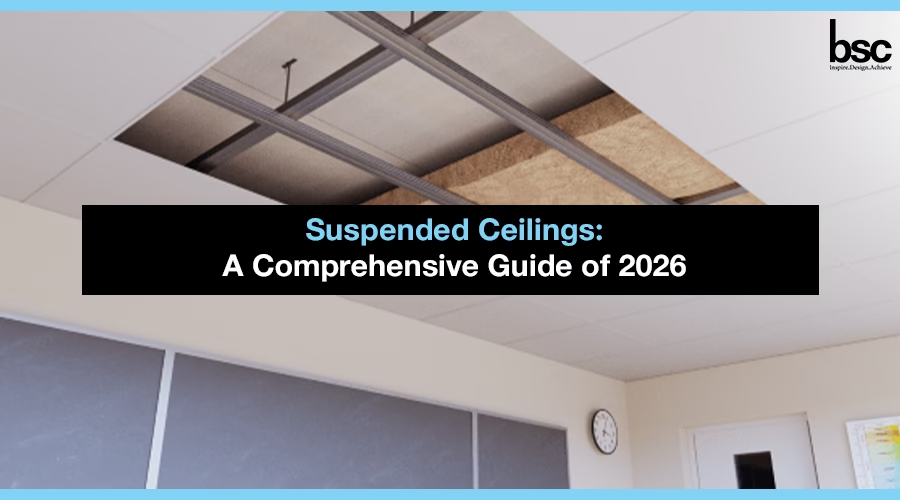
Suspended ceiling systems are one of the most convenient and popular ceiling systems in today’s commercial interior. They are no longer just used for concealing or covering an unfinished slab in 2026. They are now designed to be ceiling-based systems with performance requirements to meet acoustics, lighting, air-conditioning, fire safety, maintenance access, energy comfort and interior experience.
The ceiling’s presence is more significant in commercial venues like corporate offices, IT parks, hospitals, schools, malls, retail stores, hotels and restaurants, airports and institutional buildings where people are not typically thinking about it. It influences the appearance, noise, ease of upkeep, and comfort of use of a space on a daily basis.
Every space can be quieter, cleaner, more focused, more attractive and more premium with a well-planned suspended ceiling. However, the outcome is crucially reliant on material choice. A suspended ceiling isn’t simply a matter of tiles and grid. A full system comprised of panels, boards, framing, hangers, channels, suspension parts, insulation, lighting integration and finishing details.
That is why it is crucial for architects, contractors, builders, facility managers and procurement teams to consider the choice of suspended ceiling materials carefully. The ceiling that looks great on the first day should perform well on the 100th day of operation. It should be stable, easily accessible, appropriate for the building situation and reflect the purpose of the building.
It is our goal at BSC Interiors to educate the commercial project team on the proper ceiling material selection from trusted channel partners like Knauf, Gyproc, Armstrong, Everest and Rockwool. The mission is to provide ceiling materials, and to contribute to the design of superior performing commercial interiors.
What Is a Suspended Ceiling?
A suspended ceiling is a ceiling that is attached beneath the original structural ceiling. It can also be referred to as drop ceiling, grid ceiling, T-grid ceiling or secondary ceiling system. It is usually supported by a metal framework that is hung from the main ceiling with suspension wires, channels or hangers. Ceiling tiles, boards or panels are installed or attached to this structure.
The area between the structural slab and the suspended ceiling is called the ceiling void or plenum. This space is designed for concealment of electrical wiring, HVAC ducts and sprinkler lines, data cables, lighting systems, speakers, fire alarm systems and other building services.
Suspended ceilings provide a clean look in interior spaces in commercial buildings and provide access to services for maintenance purposes. This access is very significant in many buildings. When it’s time for an electrical line, AC duct or fire system repair, the ceiling tile can be safely removed or taken off without destroying the entire ceiling.
A suspended ceiling can be chosen not only for its aesthetic appeal, but also for its functional capabilities, as opposed to decorative residential ceiling designs. They are created to meet the requirements of the area. Acoustic ceiling tiles may be required in an office to decrease noise, for instance. Moisture resistant, easy-to-clean ceiling materials might be necessary in the hospital setting. A retail store may require a ceiling that can help to light the space and present a good appearance. A long-lasting ceiling with excellent sound ratings may be required at a school.
Why Suspended Ceilings Matter in 2026
The Commercial Building is turning into a more performance-oriented building. Today, businesses are seeking comfortable, flexible, safe, energy efficient and easy to maintain space. All these requirements can be met via suspended ceiling.
By 2026, open offices, shared workstations and meeting rooms are prevalent in many offices. These types of setups cause noise issues. Acoustic suspended ceiling tiles can help to achieve good sound comfort and reduce echo.
Ceilings in healthcare environments should facilitate hygiene, maintenance and access to service. There are a lot of hidden services, which are very important for hospitals, clinics and diagnostic centers, but they are above the ceiling.
Schools and colleges require rooms that allow for good sound transmission. A poorly-planned ceiling can cause echo and distraction. Acoustic ceilings – can enhance learning areas.
Ceiling height in retail and hospitality can be important, providing a pleasing space for brand and visual flow, and for support of lighting. The ceiling design can also help to direct the eyes of the customers and enhance their overall experience.
For industrial, IT, airport and institutional buildings, where long-term use is imperative, they require long-lasting ceiling systems that are easy to operate. This is where suspended ceilings come in handy as they offer a combination of beauty and utility.
The greatest benefit is the flexibility that remains in buildings with suspended ceilings. In the event that lighting, AC, data cabling or services require modification in the future, the ceiling system will facilitate easy access and modification.
Key Benefits of Suspended Ceilings
There are many reasons why suspended ceilings are great for commercial interiors.
- They conceal open ducts, wires, pipes and irregular surfaces on the building’s structure. This gives the interior a neat and professional look.
- Noise control is extremely vital in offices, schools, hospitals and commercial buildings. Acoustic ceiling tiles are able to absorb sound and minimize echo, creating a more comfortable environment.
- Maintenance personnel can access utilities above the ceiling when using suspended ceilings. This will make the repair easier and prevent any needless damage to the finished ceiling.
- Suspended ceilings make it easier to install recessed lights, panel lights, spotlights, cove lights and emergency lighting systems.
- Suspended ceilings can help achieve better thermal performance and improve the indoor comfort when used with insulation materials like Rockwool.
- If damaged, tiles and panels can be replaced. This is particularly helpful in places like offices, hospitals, malls, and schools where maintenance work would not be able to cause interruptions in the work for too long.
- Suspended ceilings can be manufactured from a variety of materials such as mineral fibre, gypsum, metal, wood wool, fibre cement, acoustic panels. This makes them great for various budgets, industries and design styles.
Types of Suspended Ceiling Systems
There are various types of suspended ceilings, based on material, performance and installation. The most popular is the exposed grid ceiling. This system is where the grid is visible and the ceiling tiles are inserted in the grid. It is widely used in offices, hospitals, schools, retail stores and institutional buildings due to the practical and ease of use.
- There is another type that is called a concealed grid ceiling. This system is similar, except that the supporting grid is concealed providing a cleaner and more seamless appearance. Aesthetics are more important and design calls for a premium finish, this type is used.
- Gypsum suspended ceilings are also used. They are secured with metal structure and gypsum boards. These ceilings offer a seamless and smooth finish, making them ideal for office, conference rooms, hotels, corridors and high-end commercial spaces.
- Acoustic suspended ceiling is employed when sound control is a key consideration. They are found in offices, classes, auditoriums, meeting rooms, hospitals, public buildings. They also eliminate echo and enhance speech intelligibility.
- Metal suspended ceilings are found in high-traffic commercial interiors, airports, metro stations, corridors, hospitals and industrial interior spaces. They are robust, simple to take care of and are appropriate for contemporary design themes.
- Fibre cement and moisture-resistant ceiling tiles can be helpful in damp or semi-humid spaces. They can be used in commercial and institutional buildings where sag resistance and moisture performance is significant.
- Wood wool or wood-finish ceiling systems can be used when a combination of aesthetics and acoustics is a concern. It’s not uncommon to find them in auditoriums, hospitality venues, experience centres or high end offices and recreational facilities.
Suspended Ceiling Materials Comparison
Suspended Ceiling Material | Best Used In | Main Benefit | Important Consideration |
Gypsum Board Ceiling | Offices, corridors, hotels, meeting rooms | Smooth and seamless finish | Needs proper framing and finishing |
Mineral Fibre Ceiling Tiles | Offices, schools, hospitals, commercial spaces | Good acoustic performance | Tile selection should match area usage |
Metal Ceiling Panels | Airports, corridors, public buildings, healthcare | Durable and easy to maintain | Cost may be higher than standard tiles |
Fibre Cement Ceiling Tiles | Damp and institutional areas | Moisture and sag resistance | Design options may vary by range |
Wood Wool Ceiling Panels | Auditoriums, hospitality, premium offices | Acoustic and natural look | Needs design-led planning |
Rockwool Insulation Support | Offices, top-floor spaces, acoustic areas | Thermal and sound comfort | Works as part of a ceiling system |
Gypsum Ceiling Tiles | Commercial interiors and office areas | Clean look and modularity | Choose correct tile and grid system |
Suspended Ceiling Components
The “suspended ceiling” is not just a tile ceiling. A full system. The visible tile/board is only a portion of the ceiling. The ceiling performance is dependent on the entire system.
- These are primarily comprised of ceiling tiles or boards, main runners, cross tees, perimeter angles, suspension wires, hangers, fasteners, channels, jointing materials, access panels, lighting supports and insulation materials, if needed.
- The ceiling is supported by the grid or framing. Even the best ceiling tile can fail if it is not properly installed or its framing is weak. This is the reason for the suspension system to be of good quality.
- Metal channels and metal framing members are used to support gypsum boards in gypsum suspended ceilings. The quality of the finishing material and paint, as well as the quality of the joining compound and the quality of the screws also influence this.
- The quality of the tile, detail at the edges, strength of the grid and alignment of suspension are important in grid ceilings. The ceiling will not look even if the grid is not level. Over time, if the tile is not appropriate for the environment, it could sag, stain or lose its finish.
- If the ceiling is an acoustic ceiling, the sound absorption property is important. Insulation material can be placed on top of ceiling for thermal comfort. Durability and access flexibility are important characteristics for high-traffic areas.
Where Are Suspended Ceilings Used?
Suspended ceilings are present in virtually every kind of commercial structure. They are used in workstations, cabins, meeting rooms, corridors, cafeterias and reception areas in corporate offices. They are used to control lighting, sound and access to the service.
In IT parks, for instance, suspended ceilings can make sense for large floor plates in which air-conditioning ducts, data cables, fire and lighting services must be concealed and yet available. Acoustic ceiling tiles can also be used to help absorb noise in open plan offices.
In hospitals and healthcare facilities, suspended ceilings are used in corridors, waiting areas, consultation rooms, diagnostic centers and administrative areas. In healthcare applications, maintaining cleanliness and flexibility for service is crucial, so the healthcare space requires easy-to-take-care-of and suitable ceiling systems.
Suspended ceilings enhance the comfort and sound quality in classrooms, schools, colleges and universities. They are also found in libraries, auditoriums, labs, staff rooms and administrative buildings.
Suspended ceilings provide lighting, branding, display areas and customer traffic for retail stores and malls. A carefully designed ceiling can help enhance the shopping experience.
Suspended ceilings are found in hotels and hospitality spaces in the lobby, the banquet hall, the corridor, the restaurant, and the guest area. They contribute to the creation of a high quality interior atmosphere and conceal services.
High durability and ease of access and long-term maintenance are key factors in choosing suspended ceilings for airports, metro stations and public buildings.
Applications by Industry

Industry | Ceiling Requirement | Recommended Suspended Ceiling Direction |
Offices and IT Parks | Acoustics, lighting, service access | Mineral fibre, gypsum or acoustic ceiling systems |
Healthcare | Hygiene, maintenance, service access | Modular grid systems, gypsum systems, moisture-resistant boards |
Education | Sound comfort and durability | Acoustic ceiling tiles and gypsum systems |
Retail | Lighting and visual appeal | Gypsum, metal or decorative ceiling systems |
Hospitality | Premium look and acoustic comfort | Gypsum, wood wool, metal or design-led ceiling systems |
Airports and Public Buildings | Durability and easy maintenance | Metal, modular grid and high-performance ceiling systems |
Industrial Offices | Practicality and long-term use | Durable grid ceilings and insulation-backed systems |
Acoustic Performance in Suspended Ceilings
One of the primary reasons sought out for commercial spaces using suspended ceilings is acoustics. Uncontrolled noise can be a distraction in an office setting. Learning is impacted in a classroom environment when there is poor acoustics. Noise in a hospital can cause disturbance to patients and staff. Echo can make speech difficult to understand in a meeting room.
Acoustic suspended ceiling is used to reduce the sound within a room. Ceiling tile materials, density, and surface texture and backing may be a factor in sound absorption. Acoustic ceiling tiles are used in many commercial spaces to minimize echo and provide a more pleasant atmosphere.
Acoustic ceilings are particularly helpful in open offices, where sound can easily spread from one workstation to another. The ceiling that has better sound absorption can lower the total noise. Ceiling acoustics can enhance the quality of meetings in conference and board rooms.
Teachers and students in schools and colleges enjoy improved speech intelligibility. Acoustic control can help to create a more peaceful atmosphere, which can be beneficial in healthcare environments. It enhances the comfort of guests in hotels and restaurants.
Ceiling tiles can be used to complement wall panels, carpet tiles, partitions and insulation for enhanced acoustics. A ceiling alone may not be the answer to all the noise problems, but it can be a significant factor in sound planning.
Fire Safety and Suspended Ceilings
One of the key factors to consider when choosing ceilings for commercial areas is fire safety. The ceiling system should be selected based on the building type, safety requirements and local regulations. Please be aware that fire performance may be dependent on the total system and not just the individual tile or board.
The gypsum board may have some resistance to fire, but this resistance depends on the type, thickness, framing, joints, fixing of the gypsum board, and the system design. In the same way, although metal ceilings can be durable, the fire performance should be assessed within the context of the specified system.
Fire rated is always advised for commercial projects with architects, consultants and manufacturer specification. The supplier shall be able to offer real material and technical sheets and instructions in accordance with the project requirement.
BSC Interiors recommends that ceiling systems are installed using products from reputable brands and that the installation procedures are followed correctly according to the technical guidelines. Fire protection should not be a “bolt-on” feature.
Moisture, Sag Resistance and Maintenance
Moisture/humidity problems in the room can impact the performance of the ceiling, particularly in the coastal cities, damp areas, top-floor spaces, basement areas or those located near washrooms or service zones in India. Tiles can sag, stain or lose shape with time, if the wrong ceiling material is used.
Moisture resistance and sag resistance are important in suspended ceilings because of this. Some fibre cement boards, moisture resistant gypsum boards and high performance grid ceiling tiles are more suitable for these applications.
Another crucial aspect is maintenance. Frequent ceiling damage or long downtime is not affordable for commercial buildings. The advantage of suspended ceilings is that individual tiles can be removed or replaced. This will make the maintenance easier than fully fixed ceiling systems.
Low quality material is not a desirable option for easy maintenance, however. The ceiling must be chosen for traffic, humidity, access to the service, frequency of cleaning and for long-term use.
Cost Factors in Suspended Ceilings
There are a number of factors that determine the cost of suspended ceilings. There are two factors
- The first one is the type of material. The price of a gypsum ceiling varies from that of mineral fibre, metal ceiling, acoustic panels, fibre cement and wood wool ceiling systems.
- The second factor is the project area. Material planning, wastage and installation will vary with different size areas.
- The third is the requirement for performance. Acoustic ceilings, fire rated systems, moisture resistant boards, and high quality design ceilings can have a higher initial cost than standard ceiling systems but will actually perform better in the appropriate use.
- The fourth factor is complexity of installation. A simple grid ceiling differs from a hidden grid ceiling, curved gypsum ceiling design, acoustic ceiling with insulation or premium metal ceiling design.
- The fifth factor is service coordination. When lighting, HVAC, sprinklers, speakers and access panels are to be integrated into the ceiling, planning and execution becomes more in-depth.
- The sixth one is the choice of brand. Premium brands may be more expensive upfront, but they are likely to have a better consistency, finish, technical reliability, and value over time.
The cheapest ceiling may not be the best choice for commercial projects. The best ceiling is the one where budget, performance, maintenance and design requirements are balanced.
Lighting Integration in Suspended Ceilings
Lighting and ceiling go hand in hand. A suspended ceiling can be used to incorporate panel lights, recessed lights, spotlights, emergency light, linear light, sensors and decorative lights.
The arrangement of ceiling lights in an office can influence the comfort of the employees and the visibility of computer screens. Lighting has an impact on the way products are displayed and how customers respond in retail stores. The goal of lighting in hospitals is to help people see and feel comfortable. In hotels, lighting contributes to the creation of atmosphere and luxury.
These lighting systems can be installed on a suspended ceiling and will maintain a clean ceiling structure. However, planning should be made prior to installation. Ceiling grid, tile size and layout, and the size of the light service lines should be coordinated.
Lighting planned after the ceiling installation can result in cutting problems, out-of-leveling and poor finishes. Lighting, HVAC, fire sprinklers and access panels are always part of any good ceiling plan.
How to Choose the Right Suspended Ceiling Material
Step 1: The first step to selecting the right suspended ceiling material is to understand the space. A hospital ceiling is not a retail ceiling and cannot be selected in the same manner. The choice of an open ceiling in an office setting can’t be made in the same way as in a hotel lobby.
Step 2: The first question to ask is: what is the primary purpose of the space? Is acoustic comfort important? Do you need it to be water-resistant? Will there be frequent access to the ceiling? Will it be of high end look? Should the practical aspects of a product come before its aesthetic appeal?
Step 3: Next, think of the building services that are above the ceiling. A modular grid ceiling might be more suitable if there are many duct, cables or fire systems. For a seamless appearance, gypsum board might be preferable. For applications where sound control is critical, acoustic tiles or an insulation-backed tile should be considered.
Step 4: Don’t forget to evaluate ceiling height. Special care needs to be taken in planning the ceiling depth in low height areas. The size of the tiles, the pattern of the grid, and the direction of the lights all play a role in the aesthetics of the room, especially in larger spaces.
Step 5: Last but not least, use trusted brands and suppliers. Proper selection of materials can avoid long-term maintenance problems and enhance the quality of the project.
Channel Partners for Suspended Ceiling Materials
BSC Interiors collaborates with trusted channel partners to provide solutions for ceiling and suspended ceiling materials. They use various ceiling types including gypsum systems, acoustic ceilings, grid tiles, fibre cement panels and those with insulation behind the ceiling.
- Knauf is a brand synonymous with high-quality ceiling and wall solutions, such as high-performance ceiling materials, gypsum systems, mineral ceiling options, metal systems and design-led ceiling solutions. Knauf products are ideal for offices, business buildings, institutions, hospitality and performance interiors.
- Gyproc, which belongs to Saint Gobain, is famous for its gypsum false ceiling solutions, plasterboards, ceiling tiles, metal framing systems and drywall applications. Gyproc ceiling systems are installed in areas that demand smooth finish, acoustic comfort, fire safety performance and modern interior designs.
- Today, Armstrong is synonymous with Knauf Ceiling Solutions, but in the past it was a name strongly recognized in the ceiling tile and acoustic ceiling system industry. Armstrong ceiling products are commonly associated with performance based interior products and mineral fibre tiles and commercial ceilings.
- Everest has a range of grid ceiling tiles, fibre cement boards and designer ceiling panels for commercial, residential and institutional applications. Everest ceiling materials work well in areas where moisture or sag resistance, design texture and durability are key considerations.
- Rockwool‘s ceiling solutions provide insulation options which enhance thermal comfort, sound performance and energy efficiency. Rockwool acoustical slab ceiling is particularly beneficial in acoustic ceiling applications, top level buildings, commercial buildings, and spaces that require temperature and sound control.
BSC Interiors can assist with these brands to achieve various suspended ceiling requirements in offices, hospitals, schools, retail stores, hotels, airports, commercial buildings and institutional projects.
Why BSC Interiors Is a Trusted Suspended Ceiling Material Supplier
BSC Interiors is one of the trusted commercial interior building material distributors in India that provides top quality ceiling, wall, floor, sanitary ware, workspace furniture, lighting, plywood, laminates and other commercial interior material solutions.
BSC Interiors supports the architect, interior designer, contractor, builder, facility manager and procurement team in choosing the appropriate ceiling for the specific project. The team recognizes that each commercial building has its own specifications for a ceiling. Some IT Park may require acoustic ceiling tiles, service access. In a hospital, one might want to seek out ceiling systems that provide a hygienic environment, are durable and moisture-resistant. A school requires comfort and durability. It could be necessary for a retail store to use ceiling materials that are both visually appealing and lighting friendly.
BSC Interiors’ job doesn’t stop at supplying ceiling materials. It is for the benefit of the project teams to make better material decisions. This covers the selection of an appropriate ceiling tile, board and grid system, framing material, insulation support and brand based on performance, design and budget considerations.
The BSC Interiors have a wide variety of channel partners like Knauf, Gyproc, Armstrong, Everest and Rockwool that can support an array of suspended ceiling needs for commercial projects in India.
When you need authentic suspended ceiling materials, expert advice, brand solutions and supply assistance, BSC Interiors is here to help you select a ceiling system that is right for you.
BSC Interiors’ Expert View on Suspended Ceilings
None of the following should be used as the sole basis for choosing a suspended ceiling for commercial interiors: appearance, cost. A ceiling is one of the longterm building elements. Once in place, it has a daily impact on the appearance, acoustics, maintenance, lighting and comfort of the area.
When it comes to offices, acoustics and light coordination should be a key consideration. Maintenance and material suitability are important in healthcare facilities. Schools are concerned with clarity and durability of the speech. For retail and hospitality, design impact and lighting integration is important. Duration and accessibility are key for airports and public areas.
The best suspended ceiling is the one that reflects the use of the space. There is no universal solution for all projects with one material. This is why BSC Interiors always recommends considering the ceiling system for application, needs for performance, site conditions and long term maintenance.
Although a low cost ceiling material will cost less up front, if it does not perform well, it can be more expensive to maintain and replace in the long run. All the suspended ceilings should have the right combination of design, durability, acoustic comfort, safety, service access and value.
Common Mistakes to Avoid When Selecting Suspended Ceilings
The worst thing you can do is only select ceiling tiles based on the price.
- Commercial ceilings are required to meet performance under actual conditions. When the tile is not appropriate for humidity, sound, maintenance or traffic conditions, then the project is likely to encounter problems later on.
- The other error is not taking acoustics into consideration. Ceiling tiles are often simply hung in offices and schools to make them look nice, and then complaints of echo and noise ensue. The planning of ceilings should include acoustics from the get-go.
- Coordination of lighting and services is the third error. Without the planning of HVAC, lighting, sprinklers and access panels before the installation, the ceiling configuration may appear as if it is disturbed.
- The fourth error is the use of unverifiable materials. For commercial projects, authenticity of branded materials and documentation are key. This helps to maintain consistency and performance.
- A fifth error is using the ceiling as just a layer of design. Actually, the ceiling is a working system. It helps to ensure comfort, maintenance, safety, and long term use.
Suspended Ceiling Checklist for Architects and Contractors
Architects and contractors should consider the reasons behind the use of the space, ceiling height, acoustic requirements, fire protection, moisture exposure, lighting design, HVAC coordination, access panel locations, tile size, quality of the grid, brand authenticity and maintenance plan before specifying suspended ceiling materials.
Additionally, they need to verify if the roofing material would be appropriate for the industry. For instance an office might require a different ceiling than a hospital or retail store. The finish of the premium lobby can be different than that of the back office.
Prior to a large scale installation, the material samples, technical data sheet and brand guidance should be consulted. It is also crucial to have the material available from the selected supplier throughout the project.
During this stage, BSC Interiors can assist the project team in reviewing and making a comparison between the various ceiling materials and selecting products from trusted channel partners.
If You Want to Know About the Top 10 Suspended Ceiling Suppliers In India Then You Can Click on the Below Button
Maintenance Guide for Suspended Ceilings
Suspended ceilings can be much easier to clean and maintain than some of the other fixed ceiling systems, however, they still require the proper care. Cleaning should be per manufacturer’s instructions. Strong cleaning solutions, water damage or corrosive chemicals can cause damage to the surface.
Damaged tiles should be replaced with the same or similar product to preserve uniformity of appearance. Any water leakage from the ceiling should be repaired before replacing the ceiling tile.
Care takers should not cut tiles for services at random as it will impact the look and function of the services. New openings to services should be carefully planned.
On a regular basis, the ceiling of a commercial building can be inspected. It enables early detection of stains, sagging, loose grids, damaged tiles and/or service-related issues.
When installed properly and maintained correctly, a good quality suspended ceiling can provide long lasting performance and professional appearance.
Conclusion
The suspended ceiling system is among the most crucial ceiling systems in commercial interiors for 2026. They can be used in various industries, are practical, flexible, performance-oriented, and economically feasible. In various applications, from offices and IT parks to hospitals, schools, retail, hotels, airports and public buildings, suspended ceilings enhance design, acoustics, lighting, access to services, thermal comfort and long-life value.
However, the right materials are needed for a suspended ceiling to be a success. A ceiling cannot be chosen because it appears attractive or is cheap. It should be appropriate for the space, its function, traffic, humidity, acoustics plan, and need for maintenance.
BSC Interiors assists the architects, contractors, builders and facility teams and commercial project owners in selecting the right suspended ceiling materials for their project, with trusted channel partners including Knauf, Gyproc, Armstrong, Everest and Rockwool.
For commercial ceiling projects, if you required true suspended ceiling materials, acoustic ceiling, gypsum boards, grid ceiling tile, metal ceiling system, insulation support or professional guidance to choose materials, BSC Interiors is here for you.
In search of high-quality suspended ceiling materials for your business ceiling job?
“Talk to BSC Interiors about true suspended ceiling solutions from reputed channel partners such as Knauf, Gyproc, Armstrong, Everest and Rockwool. Seek expert advice, dependable sourcing of materials and project centric assistance to offices, hospitals, schools, retail units, hotels, IT parks and commercial hospitals in India.”